beismoshiach.org

Convergence  ›  Codes in Nature

A book, on the shelf

Codes in Nature

Twenty‑four shapes found in the world — the spiral of a shell, the six arms of a snowflake, the hexagon a bee builds without being taught it — each one measured, and each one set beside the source that reads it. Where the wire above is what arrived this morning, these are the pairs that do not change. Sixty endnotes carry the citations.

Section I

The Spiral

One Curve, Every Scale

מָה רַבּוּ מַעֲשֶׂיךָ ה׳ כֻּלָּם בְּחָכְמָה עָשִׂיתָ

How manifold are Your works, O Lord — in wisdom You have made them all.

Tehillim 104:24

sound geometry
an arrow finds its calling

A spiral is a curve that winds outward from a centre, getting wider as it goes — like a staircase seen from above, or the grooves on a vinyl record. But the spirals in nature are special. They don't just get bigger; they get bigger at a constant rate. Each turn is a fixed multiple of the last, so the shape stays the same even as the size changes. A baby nautilus shell and an adult shell are the same shape — only the size is different.

This is a logarithmic spiral built from Fibonacci squares — named after the thirteenth-century Italian mathematician Leonardo of Pisa. Its growth ratio approaches the golden ratio (φ ≈ 1.618) as the squares get larger. Real shells and galaxies are logarithmic spirals too, but each with its own growth ratio; the form is universal, even when the specific proportions differ.

13 8 5 3 2 1 1
Fibonacci squares — sides 1, 1, 2, 3, 5, 8, 13. Quarter-circles inscribed in each square form the spiral.
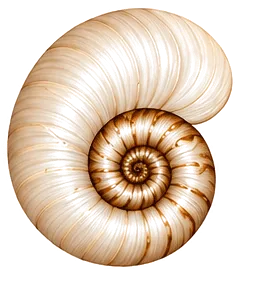
Nautilus — The Perfect Chamber

Nautilus Shell

Same Shape, Every Scale

The geometry

You've seen this shape on jewelry, tiles, and architecture books — the iconic spiral shell. Slice one open and every inner chamber is a smaller copy of the next, from the thumb-sized outermost room all the way down to the pinpoint at the centre. The animal inside — a marine mollusk, a distant cousin of the octopus — grows, builds a new chamber, and seals the old one — but the shape never changes. Only the size does.

This is a logarithmic (equiangular) spiral: the radius expands by a constant ratio with each turn — roughly tripling per full revolution for the nautilus, though it varies between species. The curve is self-similar at every magnification — a baby nautilus and an adult are geometrically identical.

In the words of Torah

The same proportion, at every scale, without deviation. R' Bachya ibn Paquda writes that anyone who examines nature with an open eye will find in every creature a sign pointing to the wisdom behind it.1 The nautilus is a perfect example: chamber after chamber, the ratio holds. It never experiments, never drifts. The Midrash says God 'looked into the Torah and created the world' — as though creation follows a blueprint.2 The nautilus shell is what that blueprint looks like when it becomes a living thing.
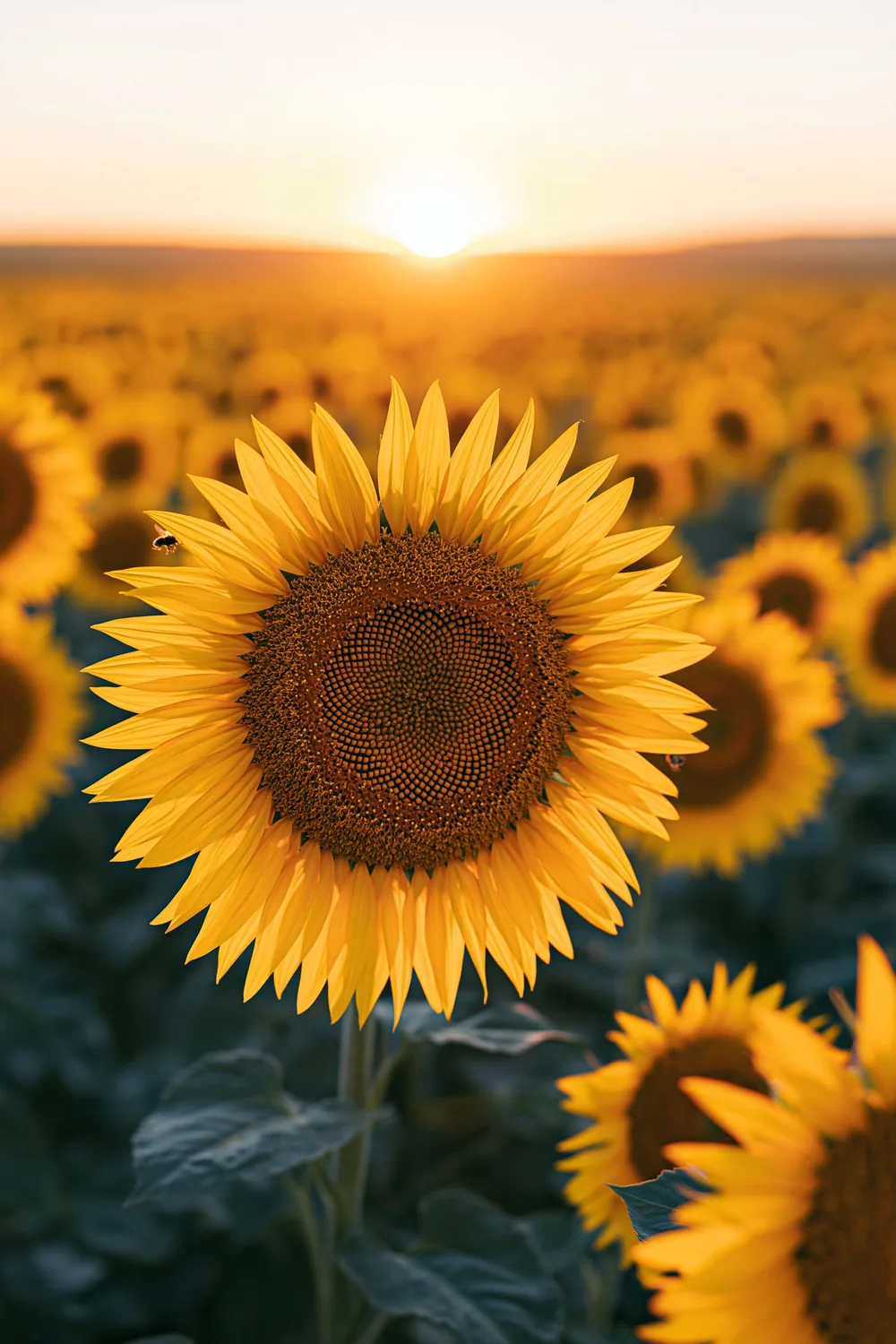
Sunflower — The Golden Angle

Sunflower Seeds

137.5° The Golden Angle

The geometry

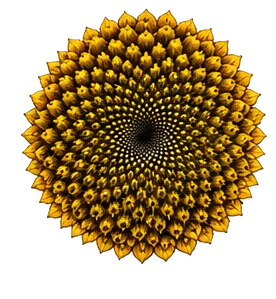
Look at the centre of a sunflower and you'll see two sets of spirals — one winding clockwise, the other counter-clockwise — packed so tightly there isn't a gap anywhere. Thousands of seeds, no wasted space. It's one of the most efficient packing arrangements in nature, and the sunflower grows it without any planning.

Each seed emerges at the golden angle — 137.5°, or 360° ÷ φ². Because this angle can never be expressed as a simple fraction of a full turn, no two seeds ever line up. The visible spirals nearly always count to consecutive Fibonacci numbers: typically 34 one way and 55 the other. No other arrangement achieves this density.

55 34
The golden angle places each seed so that 34 spirals wind one way and 55 the other.

In the words of Torah

"The hidden things belong to Hashem."48 Holy sparks are scattered throughout creation, each one belonging to a specific soul. Hashem guides each person to the exact spot their spark awaits — through paths that look like chance. The person thinks they are pursuing their own affairs; God is positioning them precisely.49 The sunflower seed knows nothing of the golden angle. It is placed, not placing — yet from that hidden logic, not one gap remains.
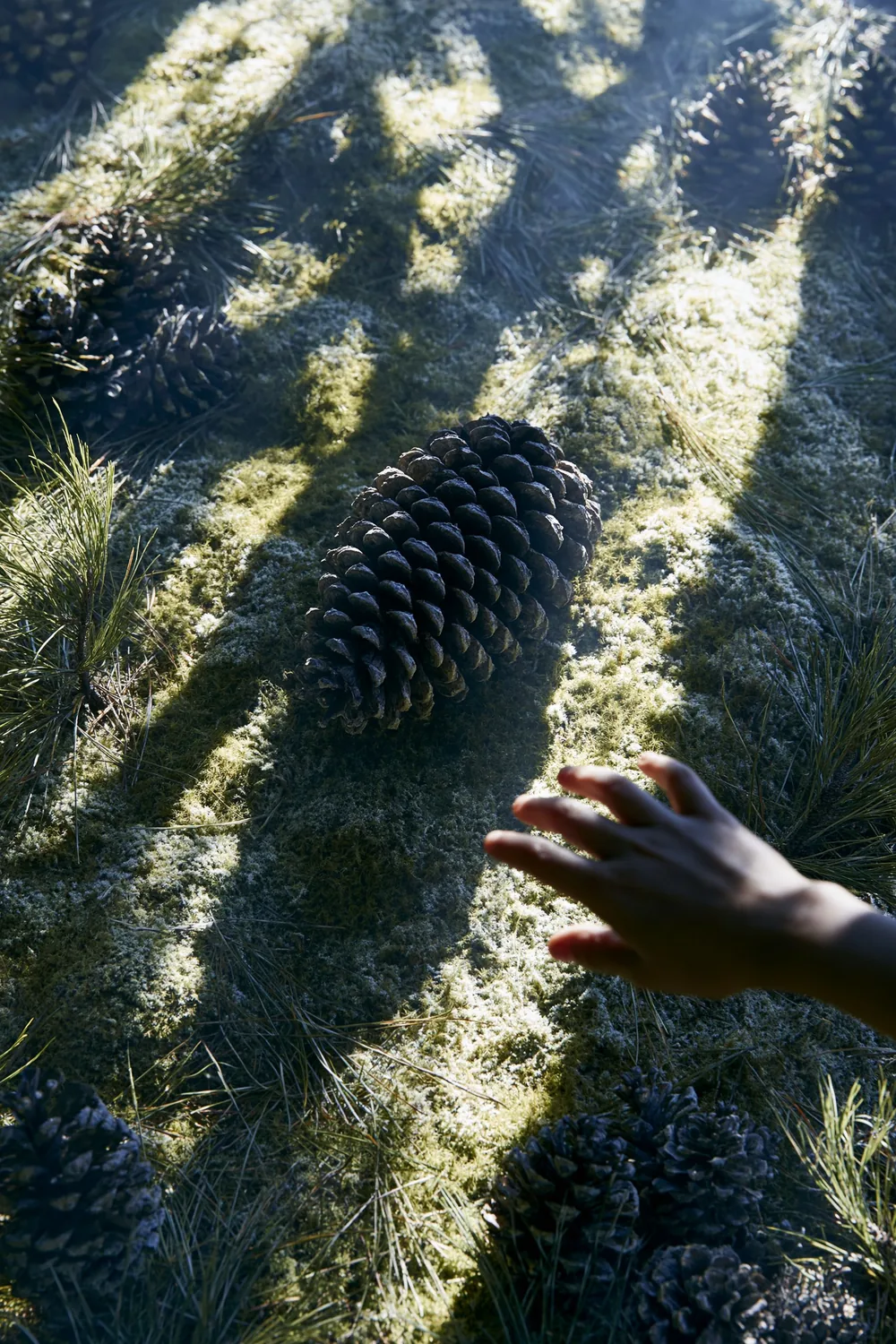
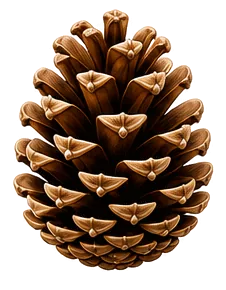
Pinecone — Counted Scales

Pinecone

8 · 13 Fibonacci Spirals

The geometry

Hold a pinecone and look at it from the bottom — you'll recognise the Fibonacci spirals from the sunflower, but wrapped around a three-dimensional cone. What's remarkable here isn't the count but the engineering. Each scale is a hinged valve: in dry air the scales flex open to release seeds into the wind; in rain they swell shut to keep the seeds safe. The spiral packing ensures every scale can move without jamming its neighbour — geometry in service of a mechanical function. Some species stay sealed for years, opening only after fire has cleared the ground below.

The spiral counts are nearly always consecutive Fibonacci numbers (5/8, 8/13, 13/21). The cone's curvature compresses the phyllotactic pattern into three dimensions.

In the words of Torah

There is a point inside every soul that no foreign touch has ever reached — gan na'ul, a locked garden, sealed and waiting.50 This inner point is always present, but it cannot always be entered. Only when the time is right does it open. The pinecone is the same: dozens of scales packed tight in a spiral, each fitted precisely against its neighbours, yet the cone stays sealed — sometimes for years — protecting the seeds inside until fire clears the ground and the moment arrives. What is worth preserving is worth enclosing.
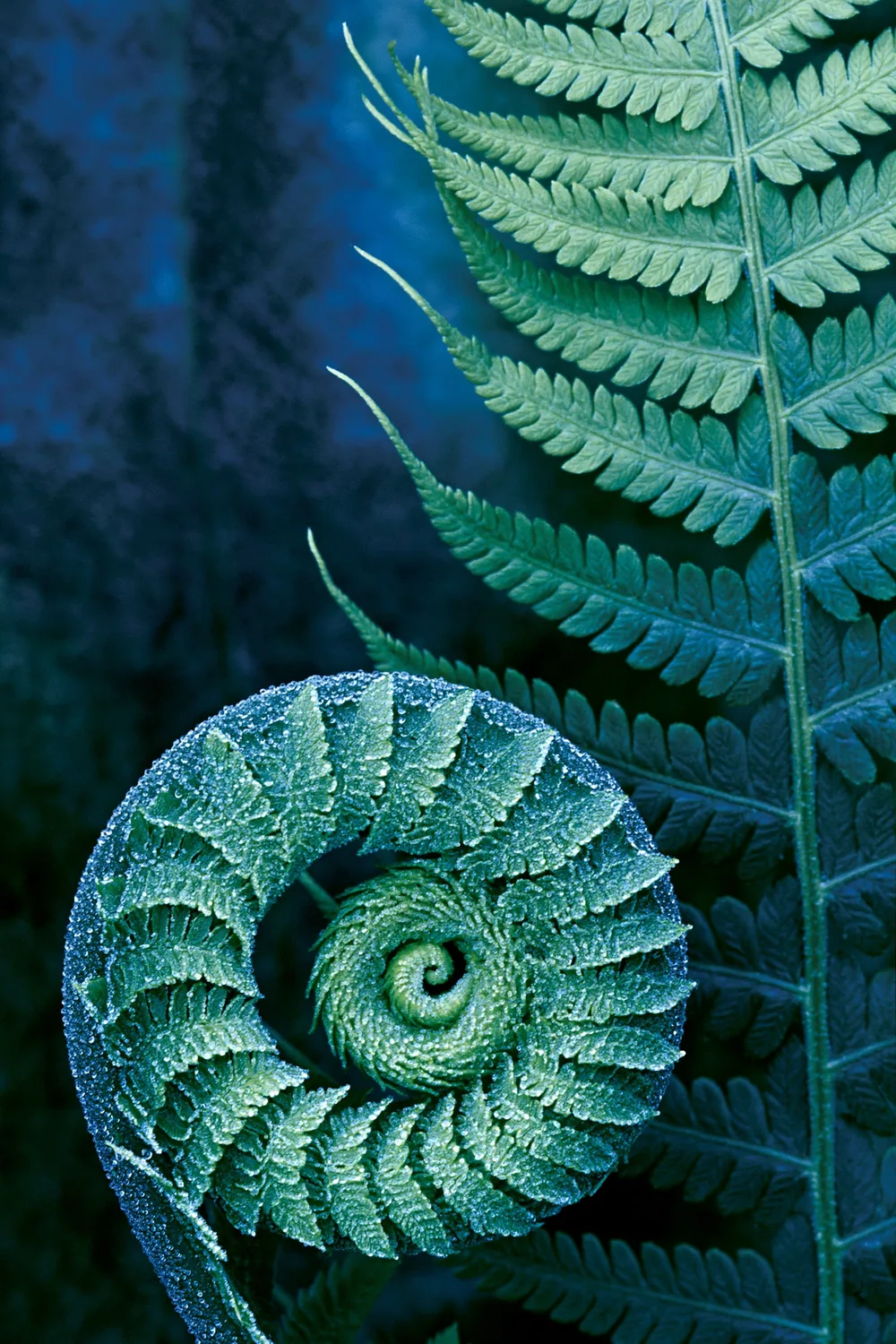
Fern — The Uncoiling

Fern Frond

The geometry

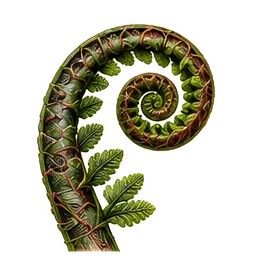
In spring, ferns push up from the forest floor as tightly coiled spirals — called "fiddleheads" because they look like the scroll at the top of a violin. As they uncurl over days, layers of detail appear: leaves on the stem, leaflets on each leaf, tiny leaflets on those. The complexity was hiding inside the coil the whole time.

The coiled fiddlehead is a logarithmic spiral. Once unfurled, the frond is fractal: pinnae on the stem, pinnules on each pinna, sub-pinnules on each pinnule — three to four levels of self-similar branching from a single coiled point.

In the words of Torah

A single coiled point unfolds into layers of complexity — simple beginnings becoming elaborate structure. The Mishnah asks: the world was created with ten utterances, but couldn't one have been enough?6 It could have — the way the fern's entire frond is contained in its single coiled fiddlehead. But the purpose of unfolding is the unfolding itself. Ten utterances from one. Pinnules from pinnae from stem from spiral. Simplicity doesn't stay simple; it grows — and every new level already existed in the first one.
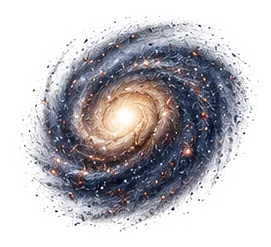
Galaxy — The Nautilus of the Cosmos

Galaxy

10²¹ m One Form, Every Scale

The geometry

The spiral galaxy is perhaps the most recognisable shape in astronomy — those sweeping arms of stars curving outward from a bright centre. You've seen it on posters, book covers, and phone wallpapers. What draws those arms is not a physical barrier but a wave — a compression moving through gas that triggers star formation as it passes.

Logarithmic spiral arms with a typical pitch angle of 10°–30°. Density-wave theory explains the arms as compression waves in gas — birthplaces of stars. From the nautilus (~10 cm) to a galaxy (~10²¹ metres), the same logarithmic curve appears — a single geometric form spanning more than twenty orders of magnitude.

In the words of Torah

"When I behold Your heavens, the work of Your fingers, the moon and the stars which You have established — what is man that You are mindful of him?"7 The Rambam writes that contemplating the size of the cosmos humbles a person while simultaneously revealing the greatness of the One who designed it all.5 The Ramban reads natural law itself as the ongoing voice of creation — a single act of divine speech still unfolding.8

Section II

Symmetry

Balance as Nature's Signature

שְׁאוּ מָרוֹם עֵינֵיכֶם וּרְאוּ מִי בָרָא אֵלֶּה

Lift up your eyes on high and see — who created these?

Yeshayahu 40:26

Symmetry means that something looks the same after you transform it. A butterfly has bilateral symmetry: fold it down the middle and the two halves match. A flower has radial symmetry: rotate it by a fixed angle and it looks unchanged. A snowflake has six-fold symmetry: turn it 60° and you can't tell it moved. These aren't just pleasing to the eye — they're functional. A symmetric wing flies straight. A radially symmetric flower is equally visible to a pollinator from any direction. Nature doesn't choose symmetry for beauty; the beauty is a side effect of things that work. This section moves from the most familiar symmetry — a butterfly's mirror wings — through increasingly exotic forms, ending with the sea urchin's five-fold radial plan, a geometry so unusual it has no equivalent on land.

Bilateral symmetry has one axis of reflection. Radial symmetry of order n means the shape maps to itself after rotation by 360°/n. The snowflake's six-fold symmetry traces to the 120° bond angle of water molecules. Regular pentagons, unlike hexagons, cannot tile a plane — which makes five-fold symmetry rare in the mineral world but dominant in flowers.

72°
Regular pentagon — five mirror axes and a 72° rotation.
Butterfly — The Emergence

Butterfly Wing

The geometry

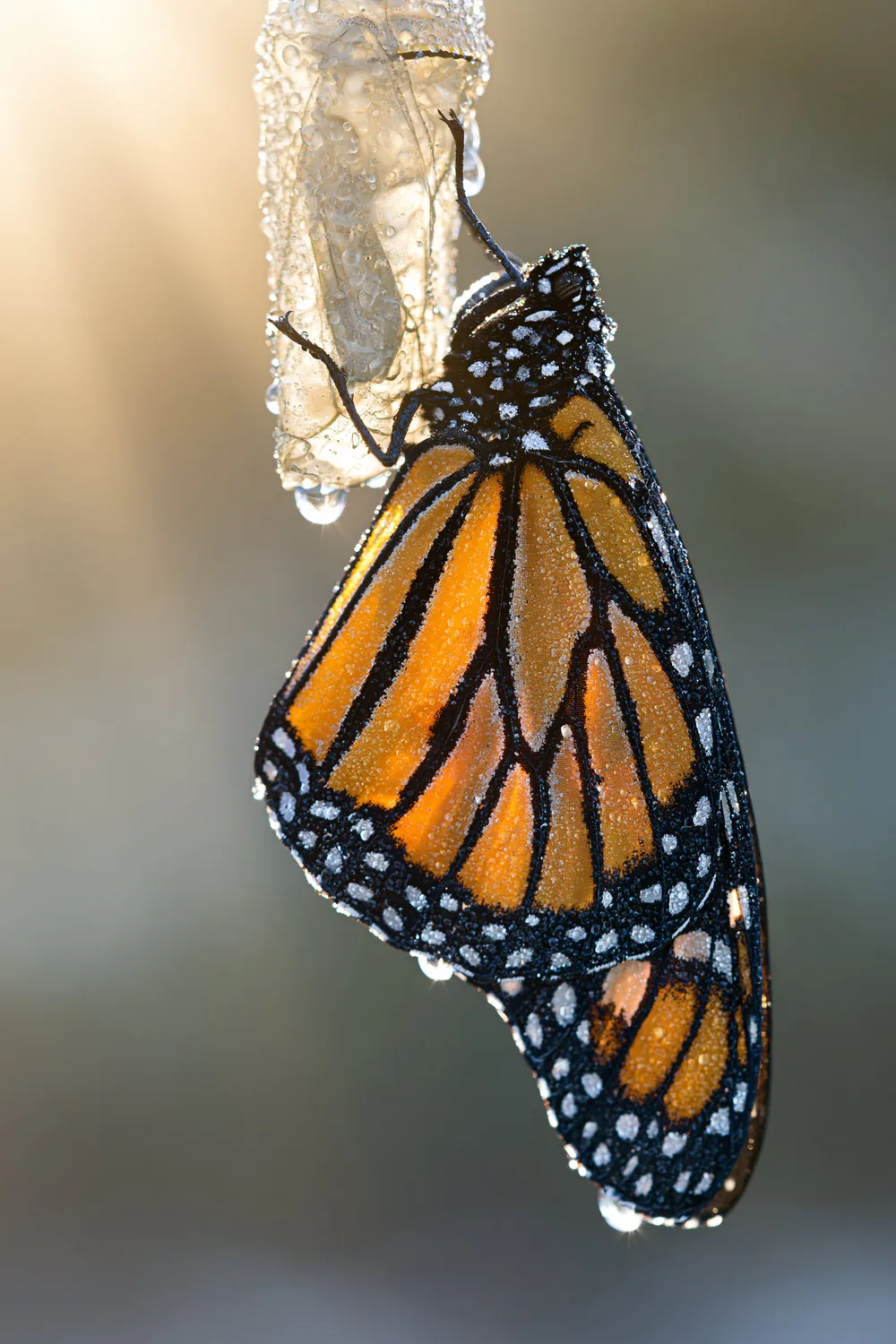
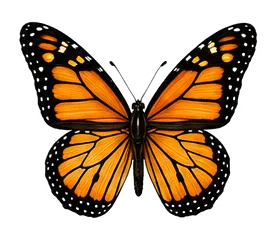
Fold a butterfly down the middle and the two halves match almost perfectly — same colours, same spots, same shape, just mirrored. Without its symmetry the butterfly would spin out of control in flight. The balance has to be exact.

Bilateral symmetry — the left half mirrors the right across a single axis. The wing surface is built from tens of thousands of tiny overlapping scales (~100 microns each), layered like roof tiles, each one a single colour. Together they produce the pattern. What makes the symmetry remarkable is that left and right wings develop independently inside the chrysalis, yet emerge matching to the scale. Even the eyespots — the circular markings that startle predators — are placed symmetrically, because predators' brains are wired to detect faces, and two matched circles trigger that instinct.

In the words of Torah

Two wings, mirror images — precision down to micrometres, because even a slight imbalance would send the creature spinning. The Torah places two golden Keruvim on the Ark, facing each other, wings outstretched.9 When Israel does the will of Hashem the Keruvim face one another; when not, they turn away.10 Alignment brings the Shechinah; turn away, and it departs. The butterfly teaches the same law in flesh and pigment — break the symmetry and the creature cannot fly.
Lotus — Beauty from Mud

Lotus Flower

n Radial Order

The geometry

The lotus is the flower you see in ponds, Eastern art, and temple carvings — admired for centuries for its perfectly balanced petals radiating from a centre. For all its elegance, it stems from the humblest of origins: murky, stagnant mud. Yet from that mud rises immaculate symmetry.

Radial symmetry of order n, where n is the petal count — lotuses vary widely, from about 14 to 30 tepals depending on the variety. Each petal is itself bilaterally symmetric: symmetry within symmetry, the part repeating the logic of the whole.

The dashed gold line marks a mirror axis within a single petal — bilateral symmetry nested inside radial.

In the words of Torah

Beauty that rises from difficulty. Shir HaShirim says: "As a rose among thorns, so is my beloved."11 The lotus blooms from murky water, yet its symmetry is flawless. The Maharal taught that real beauty, what Torah calls tiferet, is the harmony of opposites, not the absence of tension.12 That is exactly what the lotus shows: perfect balance grown from unlikely conditions.
Hibiscus — Five-Fold

Hibiscus Bloom

5 The Fivefold

The geometry

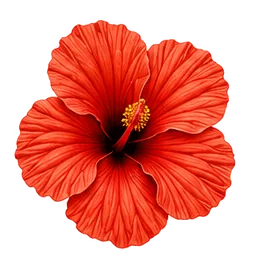
Count the petals on a hibiscus — or on a wild rose, a buttercup, an apple blossom — and you'll land on five. Five petals, and if you look inside the flower, five more structures repeat the same number. The fiveness runs from the visible surface all the way down to the parts you'd need a magnifying glass to see.

Five-fold radial symmetry, characteristic of most angiosperms. Five is a Fibonacci number, and the pentagonal logic continues internally: five carpels, five stigmas. Unlike hexagons, regular pentagons cannot tile a flat surface — making this symmetry rare in the mineral world but dominant in flowering plants.

In the words of Torah

The Ark in the Tabernacle was overlaid with gold on the inside and on the outside — teaching that a person's hidden life must match the one others see.51 The hibiscus is built on this principle. Five petals on the surface; open the flower and the same fivefold pattern repeats in the carpels, the stigmas, the invisible architecture beneath. What you see from outside is what exists within. Torah calls this tocho k'baro — its inside matching its outside, the very definition of integrity.
Snowflake — One Law, Infinite Expressions

Snowflake

6 Always Six

The geometry

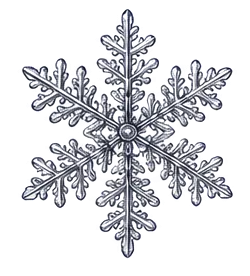
Catch a snowflake on your glove and look closely — whether it's a branching star, a simple plate, or a slender column, its symmetry is always sixfold. Never five, never seven. And if you could compare it to every snowflake that has ever fallen, you'd never find a duplicate. Same rule, infinite variety. The six-ness comes from the way water molecules bond when they freeze; the uniqueness comes from the fact that each crystal takes a slightly different path through the cloud.

When water freezes, hydrogen bonds arrange molecules into hexagonal lattices — the crystal angles lock at 120°. The branching is fractal — each arm spawns sub-arms at the same 60° angles, which spawn still smaller arms. Every flake's unique journey through varying humidity and temperature produces a unique branching history.

In the words of Torah

Every snowflake follows the same hexagonal rule, yet no two are identical — each one's path through the atmosphere shapes its branches differently. At the end of the book of Iyov, Hashem finally speaks — not to explain suffering but to point at creation: "Have you entered the storehouses of the snow?"14 The Vilna Gaon explains that what God stores as snow is itself wisdom — hidden design, waiting to be noticed.15 The snowflake is the proof. Every crystal obeys the same hexagonal law, yet each one's journey through the cloud gives it a shape no other crystal has ever worn. Torah works the same way: one set of laws given to an entire people, yet every person who lives by them brings something into the world that no one else could.16
Dragonfly — Four Wings, Perfect Hover

Dragonfly

4 Independent Wings

The geometry

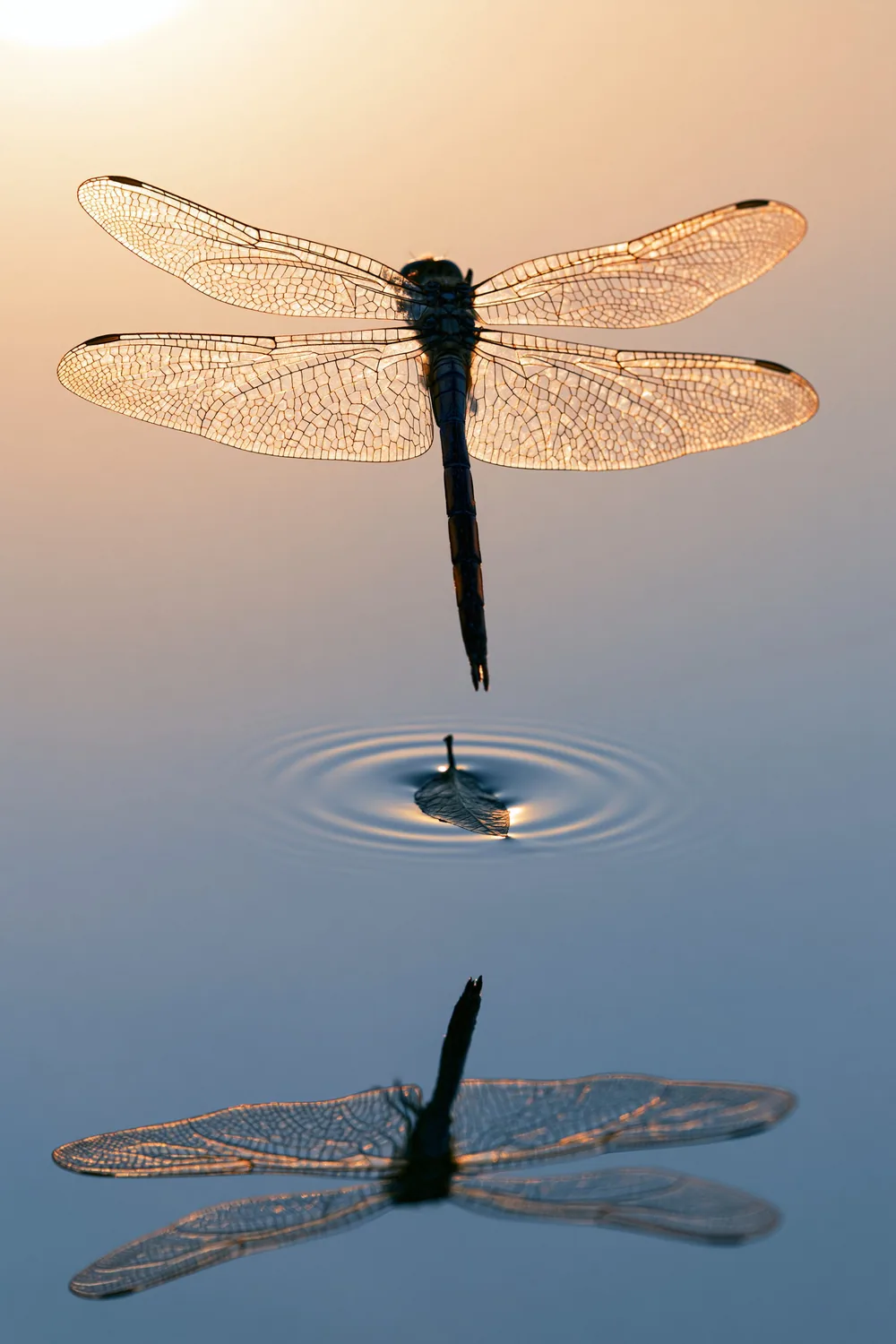
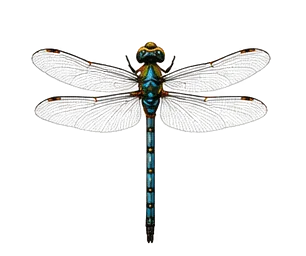
Watch a dragonfly over a pond and you'll see something no helicopter can match — it hovers, flies backward, pivots on a point, and stops in mid-air. The secret is in the wings: four of them, each moving independently, each one a transparent mesh of tiny cells that looks fragile but is astonishingly strong.

The wing venation is a cellular lattice of triangular and quadrilateral cells — rigid yet weighing less than 1% of body mass. Four independently beating wings enable six-degree-of-freedom flight, including true hovering and reverse — manoeuvres beyond any fixed-wing aircraft.

In the words of Torah

The Tabernacle was built with generosity — but not a single element went to waste. Six wagons were given to transport it: not seven, not five. Six was precisely what the load required, and there was no room to add more.52 Every component fulfilled its exact purpose; nothing was decorative, nothing redundant. The dragonfly wing follows the same principle — less than one percent of the animal's weight, yet every cell in its mesh is load-bearing. Sacred engineering, whether in the desert or in the air, is generosity without excess.
Sea Urchin — Alien Geometry

Sea Urchin

5 Pentaradial

The geometry

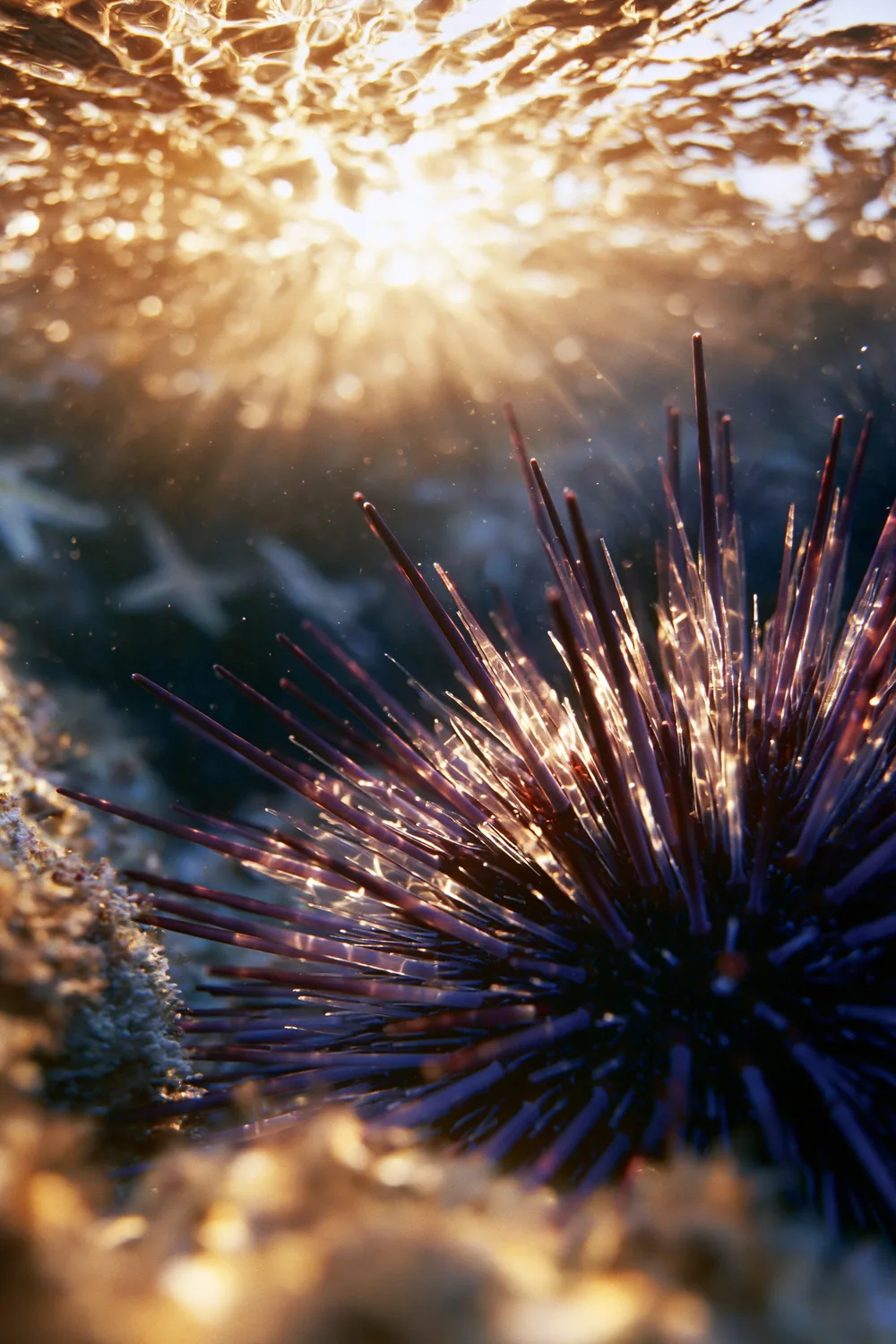
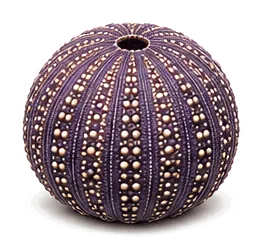
Pick up a sea urchin shell on the beach — the round, spineless kind washed ashore — and turn it in your hand. You'll notice it's divided into five equal sections. Not four, not six — five. This five-part plan is the signature of an entire branch of marine life: starfish, sand dollars, sea cucumbers — all built on fives.

Pentaradial symmetry — the hallmark of all echinoderms. Remarkably, their larvae are bilaterally symmetric (like us) and only reorganise into this rare five-fold form as they mature. The test plates fit together like pentagonal cobblestones, arranged in 20 columns of 10 paired sections.

In the words of Torah

An entirely alien geometry — five-fold symmetry, so different from the bilateral world we live in. The ancient Perek Shirah gives every creature its own hymn of praise — even the creatures of the deep that most people will never see.18 The Rambam makes the point simply: the sheer variety of forms in creation, each one perfect in its own geometry, shows not limitation but boundless creativity.5 The sea urchin exists as if to say: the Designer is not repeating Himself.

Section III

Fractals

The Infinite Within the Finite

הַבִּיטוּ אֶל צוּר חֻצַּבְתֶּם

Look to the rock from which you were hewn.

Yeshayahu 51:1

Eden waters
the pleasure gardens
ahead

A fractal is a shape where the part looks like the whole. Break off a piece of broccoli and it looks like a miniature broccoli. Zoom in on a coastline and every bay contains smaller bays that contain still smaller bays. A tree's branch splits into smaller branches that split into twigs — the same forking pattern at every scale. A simple rule — 'split and repeat' — produces structures of enormous complexity. A river delta, a bolt of lightning, and the veins in a leaf all follow the same branching pattern, even though they're made of completely different materials. Once you learn to see fractals, they appear everywhere — in the branching of your lungs, in the clustering of galaxies, in the pattern of frost on a windowpane. This section travels from the kitchen table to the ocean floor, showing one principle at work in five very different environments.

The word "fractal" was coined by the mathematician Benoît Mandelbrot in 1975, from the Latin fractus (broken). Fractals have a fractional dimension — lightning, for instance, has a dimension of ~1.7, meaning it fills more space than a line but less than a plane. The branching pattern common to rivers, trees, and electrical discharge resembles diffusion-limited aggregation.

Each child branch 0.72 × parent, rotated ±25°. Seven levels; 127 branches.
Romanesco — The Vegetable That Teaches Fractals

Romanesco Broccoli

Levels of Similarity

The geometry

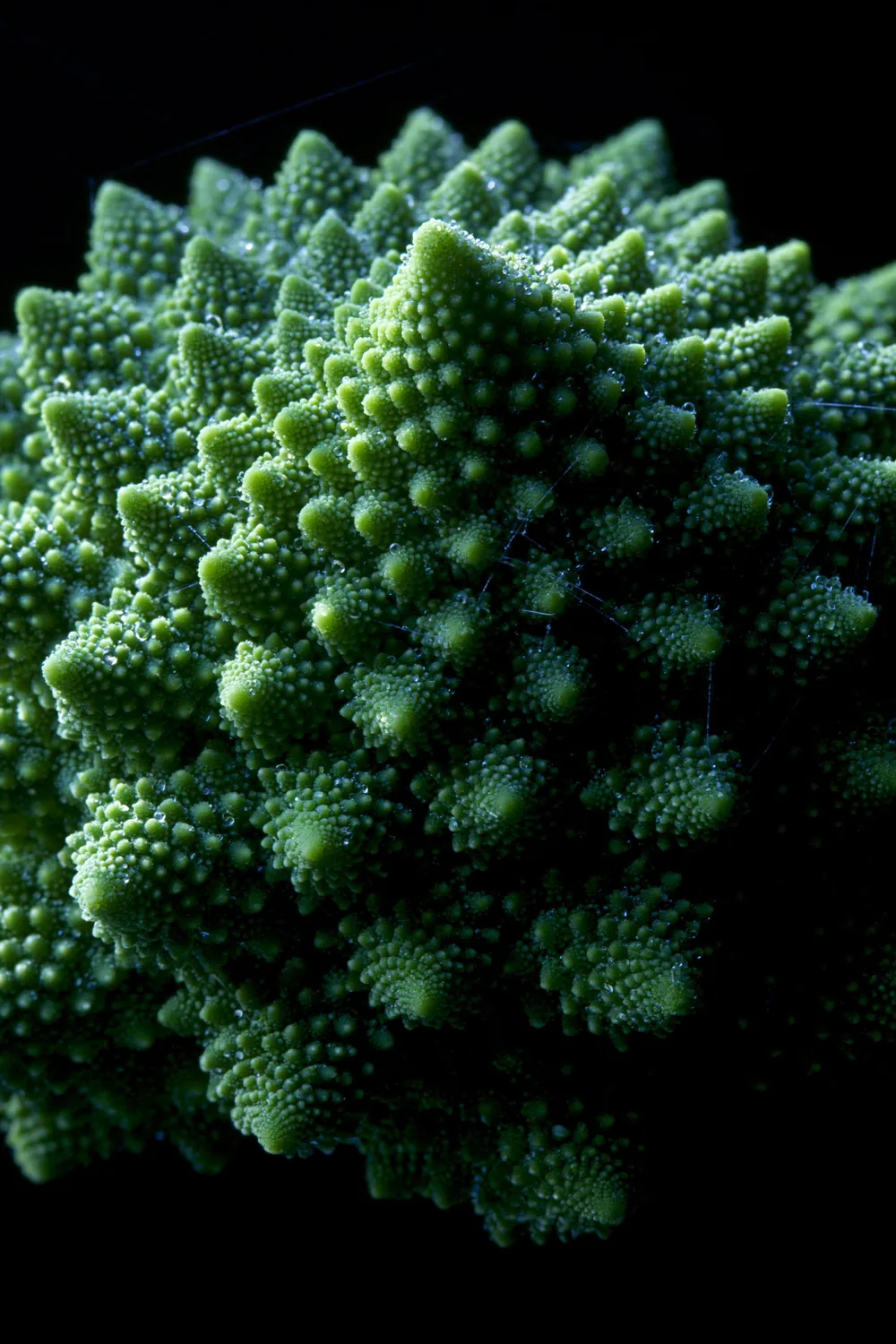
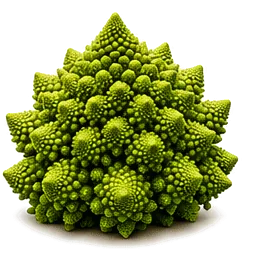
If you've seen Romanesco at a farmer's market, you probably stopped and stared. It looks almost alien — a bright green cone made of smaller cones, each made of still smaller cones, all the way down. It's the vegetable that teaches people what the word "fractal" means: a shape where every part is a miniature copy of the whole.

A true natural fractal with three to four levels of self-similarity visible to the naked eye. Each level also spirals according to Fibonacci numbers — count the spirals at any scale and you'll find them. The pattern repeats at every magnification until the branches are too small to see.

In the words of Torah

"See, and build according to the pattern."53 When God showed Moshe the design of the Tabernacle, He was showing him the architecture of everything. The Ibn Ezra, citing the Gaon, counts eighteen elements that repeat across three worlds: the cosmos, the Tabernacle, and the human body. The heavens correspond to the curtains of the Tabernacle and to the dome of the skull. The great luminaries correspond to the menorah and to the eyes. The earth corresponds to the foundations and to dust. Each world is built on the same tavnit — the same blueprint — as if the Creator used one design and expressed it at every scale. Look at the Romanesco and you see this principle growing in a garden. Break off a single floret and it contains the whole — the same spiralling geometry, the same proportions, all the way down. The part carries the pattern of the whole, because it was built from the same blueprint.
Leaf — The Map Inside

Leaf Venation

r³ = r³ + r³ Murray's Law

The geometry

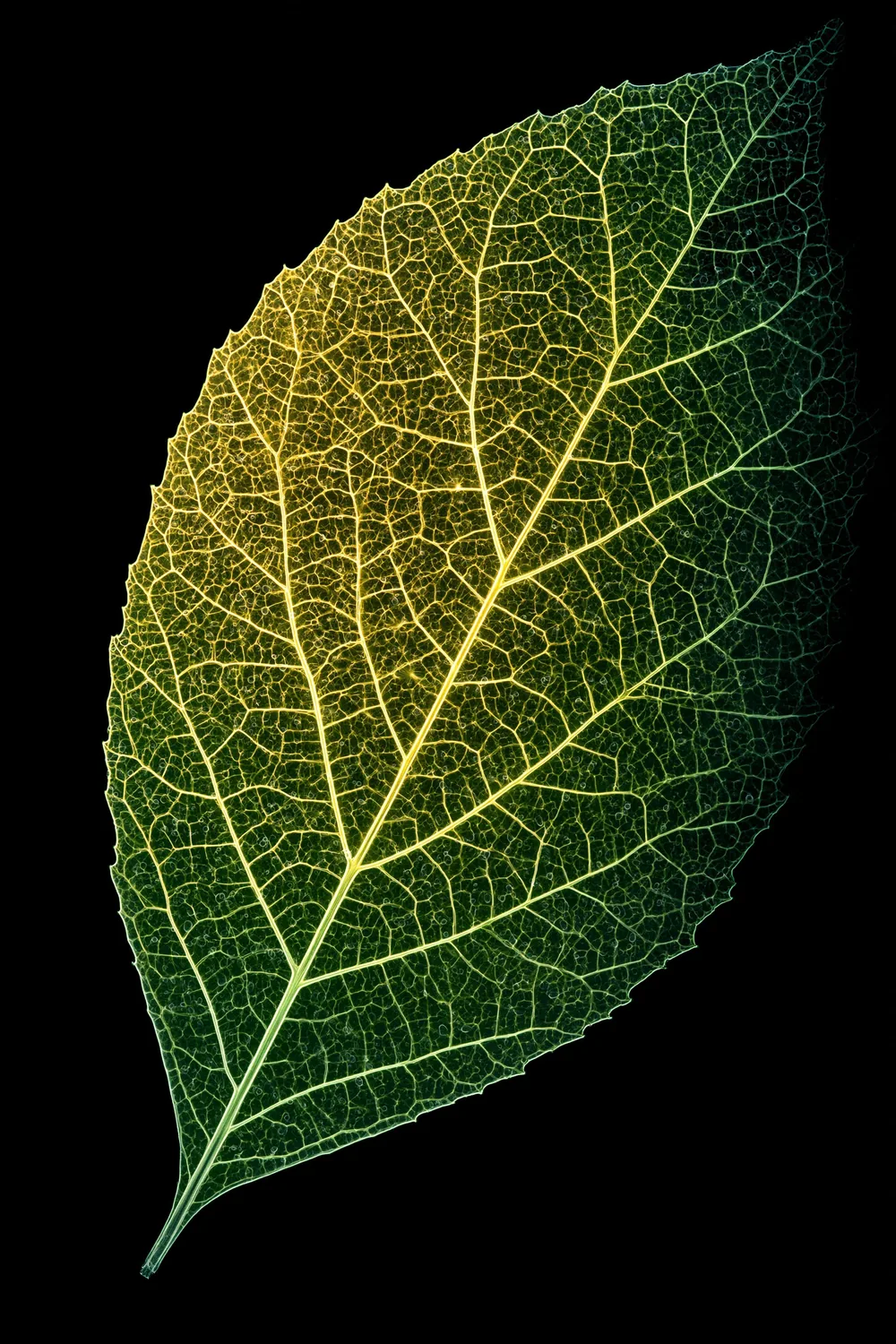
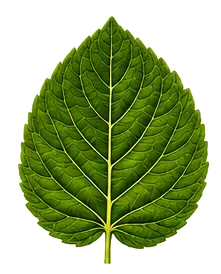
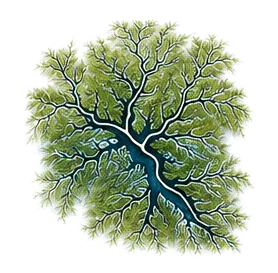
Hold a leaf up to the light and you'll see a network of veins — a thick one down the middle, thinner ones branching off, and hair-thin capillaries branching off those. It looks like a road map, or a river system. Every split follows the same rule: the parent vein divides into daughter veins at proportions that minimise the energy needed to move fluid.

A fractal branching network, each generation following the same rules at smaller scale. The proportions obey Murray's Law: the cube of a parent vein's radius equals the sum of the cubes of the daughter veins' radii — minimising fluid resistance. The same principle governs the human cardiovascular system.

In the words of Torah

"As the rain descends from heaven and does not return until it has watered the earth" — so should you be: to give to all.54 The leaf vein is exactly this. One midrib divides into smaller veins, which divide again, governed at every split by the same equation. The geometry exists for one purpose: that nourishment reaches not just the cells near the trunk but every cell at the farthest margin. A system designed so that nothing returns empty and no part goes unfed.
Lightning — The Branching Fire

Lightning

1.7 Fractal Dimension

The geometry

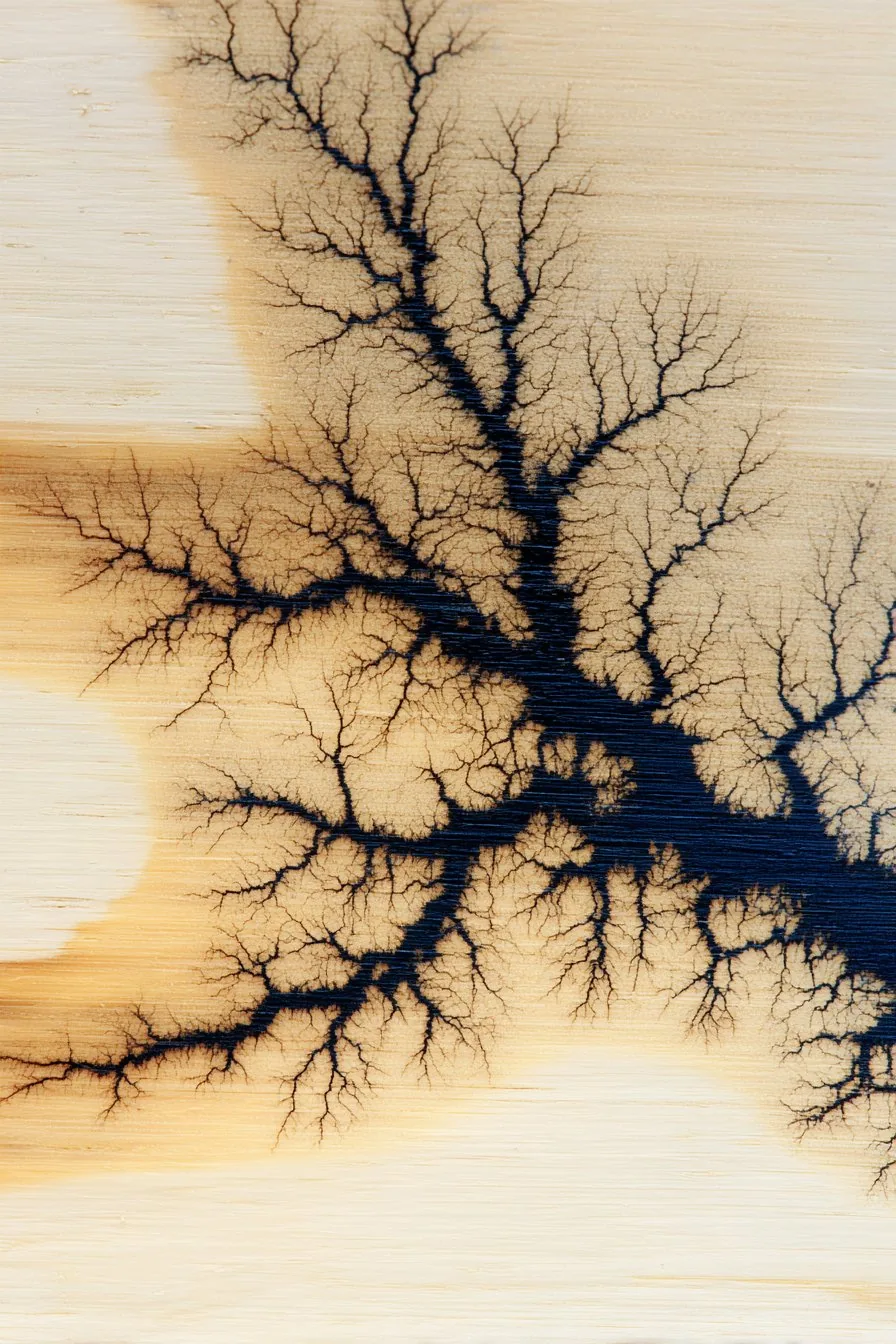
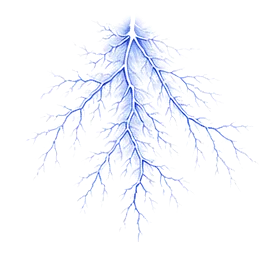
A bolt of lightning lasts a fraction of a second, but in that instant it draws a branching tree across the sky — each fork following the path of least electrical resistance, splitting wherever the air ionises first.

A fractal with dimension ~1.7 — more than a line, less than a plane. The branching pattern resembles diffusion-limited aggregation (DLA), in which particles wander randomly and stick on contact, producing a branching tree.

1.01.52.02.53.0 smooth linecoastlinelightningbroccolilungs d ≈ 1.00d ≈ 1.25d ≈ 1.70d ≈ 2.66d ≈ 2.97
Lightning's fractal dimension on a scale from a straight line (1.0) to solid volume (3.0) — neighbors include coastlines, broccoli, and the surface of your lungs.

In the words of Torah

One flash, countless branches — and every branch follows the same rule. The Psalmist says: "The voice of the Lord strikes flames of fire."23 Lightning starts as a single point of energy and fractures outward into a branching tree. Torah uses the same image for revelation: one voice at Sinai, splitting into seventy languages, reaching every ear differently.24 Different people, identical source. The same idea that explains the geometry of lightning explains how one teaching can become a million conversations.
River Delta — One Becoming Many

River Delta

~70° Typical Bifurcation

The geometry

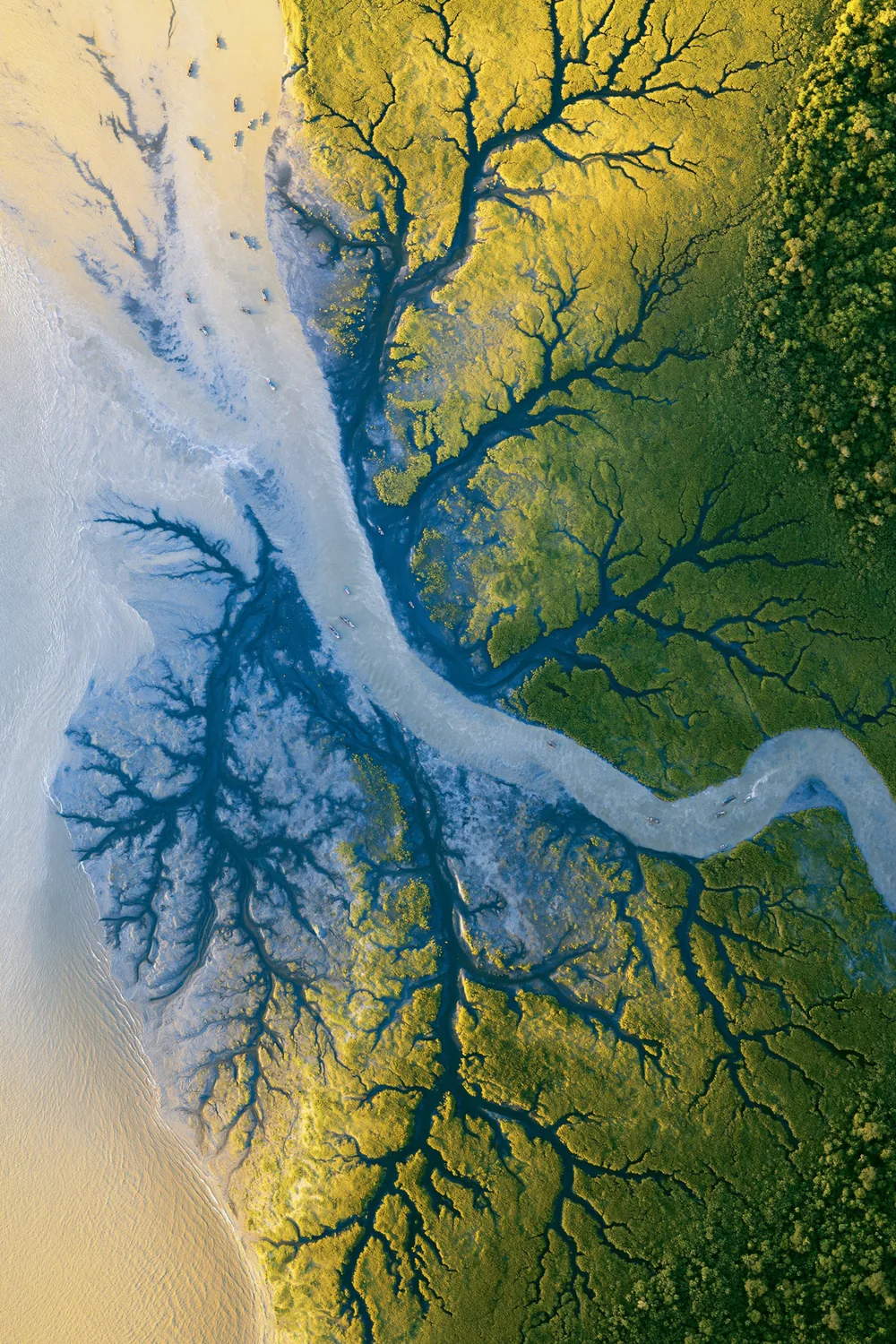
Fly over the mouth of any great river — the Nile, the Mississippi, the Ganges — and you'll see one channel splitting into two, then four, then dozens, fanning out like a tree laid flat. Centuries of flooding built this: sediment blocks the old path, the water finds a new one, and the fan grows wider.

A distributary fractal — the mirror-image of a tributary network. Channels split at characteristic angles (often near 70°, though highly variable) as sediment forces water to find new paths. The branching dimension is ~1.7–1.85.

In the words of Torah

Yechezkel sees a river flowing from the Temple into the Dead Sea — the saltiest, most lifeless water on earth. And there the waters are healed, and fish swarm where nothing could live.56 The river does not seek the easy path. It flows to the place that needs it most, and what it carries transforms death into abundance. The delta is this vision written in sediment. Centuries of flooding — what looks like destruction — deposit the richest soil on barren coastline. New land, new life, from what seemed like ruin.
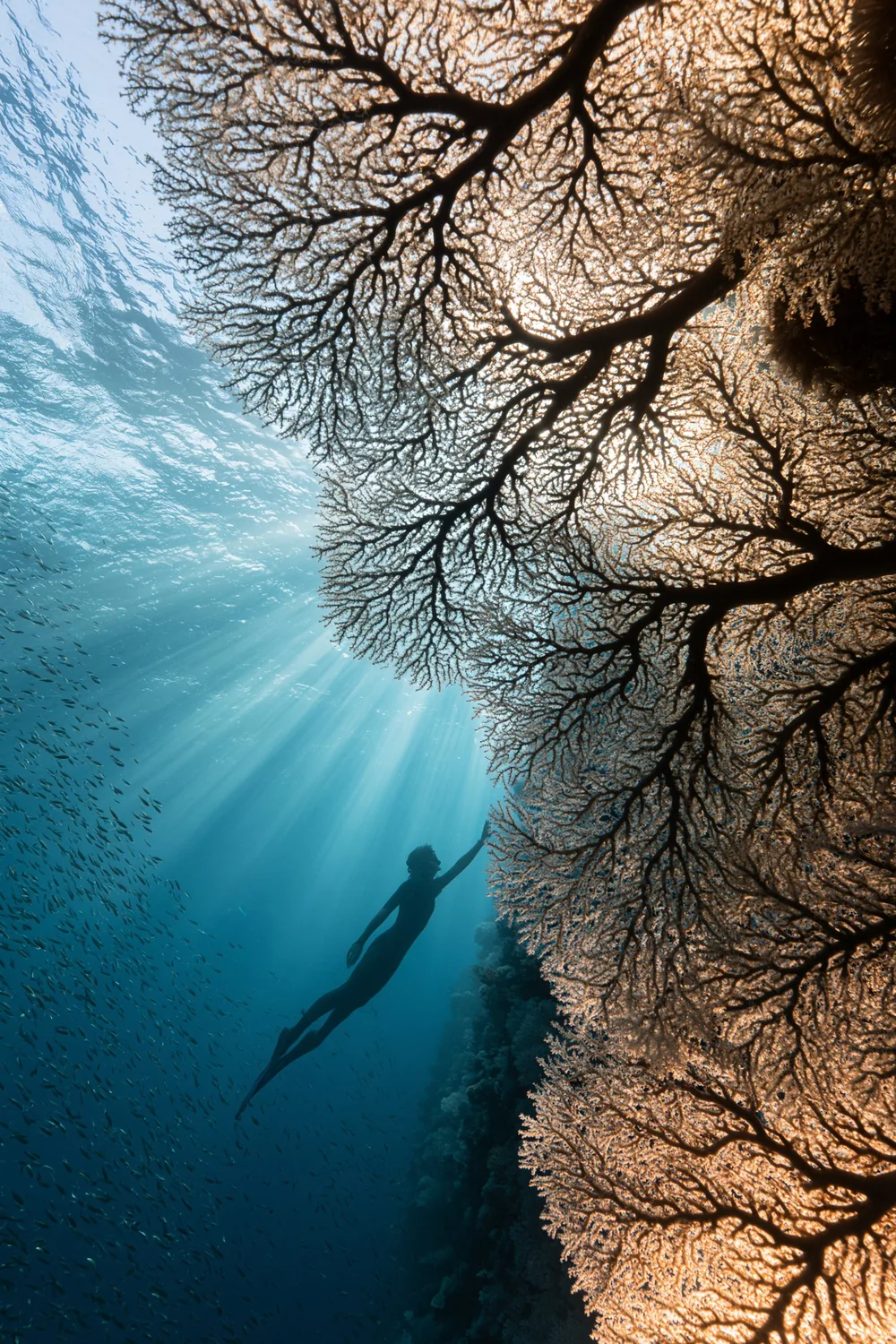
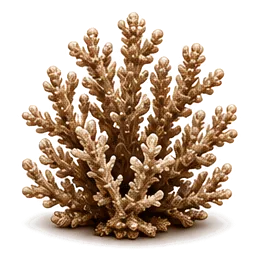
Coral — The Collective Cathedral

Coral Formation

The geometry

Snorkelers know coral as the colourful, branching structures that build entire underwater cities. What they're looking at is the collective work of millions of tiny animals — each polyp adding its small piece to a structure that can eventually span kilometres. No single polyp has a plan for the reef. The geometry of the whole emerges from each one following simple rules.

Different species solve the same problem — maximise surface area for sunlight and water flow — with different geometries: fractal branches (staghorn), convoluted folds (brain coral), hexagonal mesh (table coral). Form is dictated by current speed and light conditions — geometry as environmental adaptation.

In the words of Torah

"It is not upon you to finish the work, but neither are you free to desist from it."57 The work has no end — and this is the design, not a flaw. Every effort is a completion in itself, like a sower whose every seed is already whole. The coral polyp lives by this law. No polyp sees the reef. Each one deposits its small geometry, guided by the same code, and dies. Generations pass. The reef rises — a structure no individual could have built, assembled from a thousand completed acts.

Section IV

Geometry as Survival

How Shape Keeps Things Alive

לֵךְ אֶל הַנְּמָלָה עָצֵל רְאֵה דְרָכֶיהָ וַחֲכָם

Go to the ant, you sluggard; consider her ways and be wise.

Mishlei 6:6

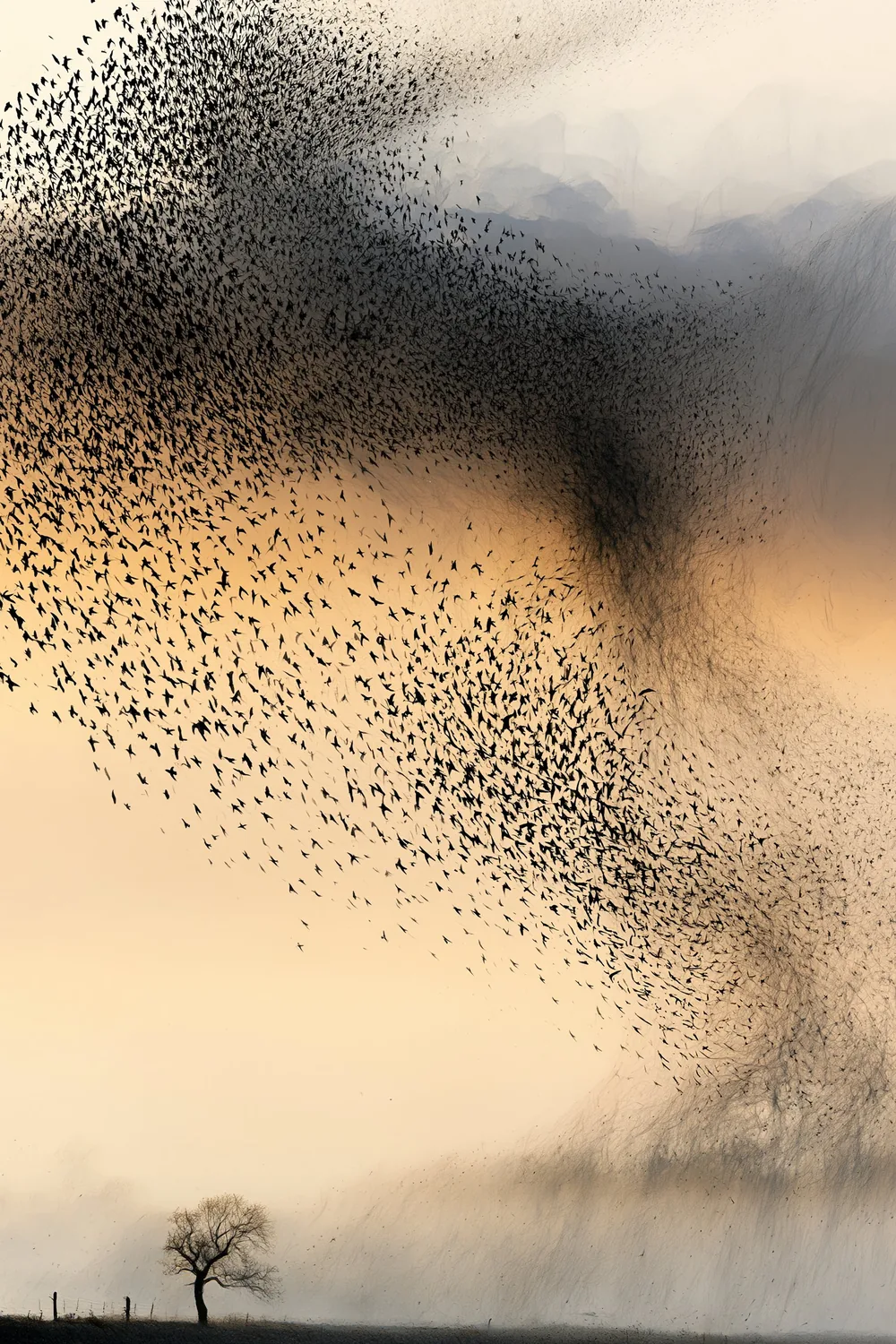
riding the wake
the flock translates
a calling

The first three sections explored geometry as pattern — beautiful, mathematical, awe-inspiring. This final section asks a different question: what is geometry for? The answer, in nature, is almost always the same: survival. Hexagons store the most honey with the least wax. Accordion folds let a cactus survive drought. A ball-shaped swarm conserves the most heat. A V-formation lets geese fly much farther. A spider's web distributes force so one struggling insect cannot collapse the whole structure. In every case, the geometry is the strategy — the shape isn't decorative, it's doing the work. This section moves from collective intelligence to individual identity: communities that survive through shared geometry (the hive, the school, the flock), solitary creatures whose geometry is their armour (the spider, the tortoise), and finally — the human fingerprint. After twenty-three examples from nature, the twenty-fourth turns the lens toward you.

The underlying principle is optimisation: nature converges on shapes that minimise cost (energy, material, exposure) while maximising benefit (storage, range, protection). These are the same trade-offs that engineers face — solved here through evolutionary pressure acting on geometry over millions of years.

120°
Seven regular hexagons tiling the plane. 120° at every vertex.
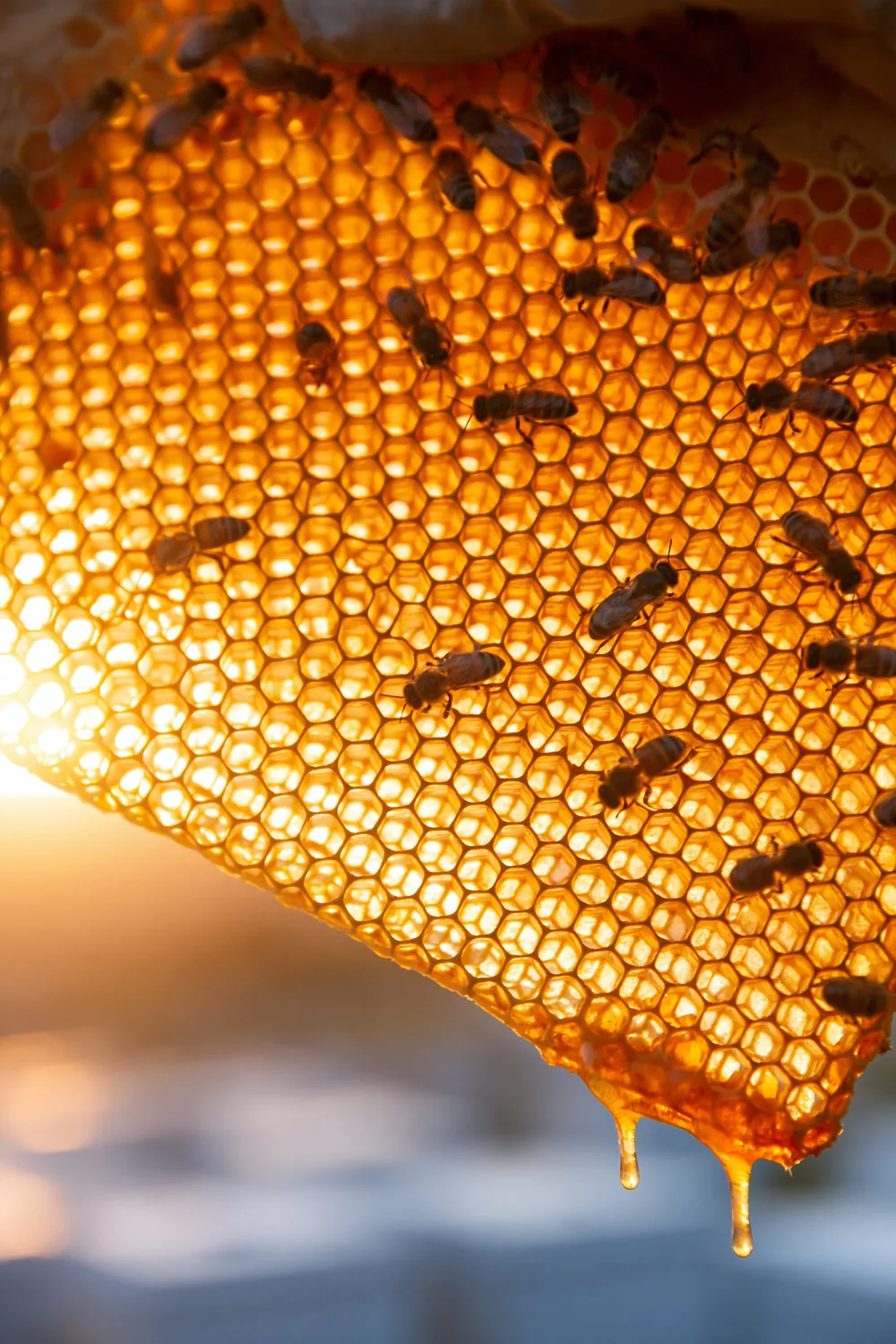
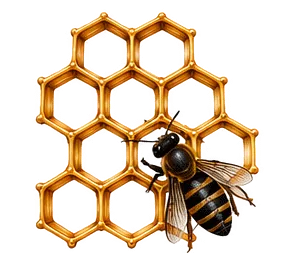
Honeycomb — Maximum Storage, Minimum Wax

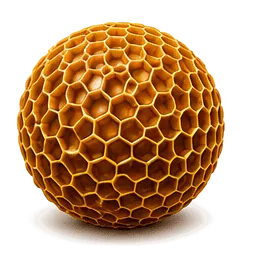
Honeycomb

1,700 Years from Conjecture to Proof

The geometry

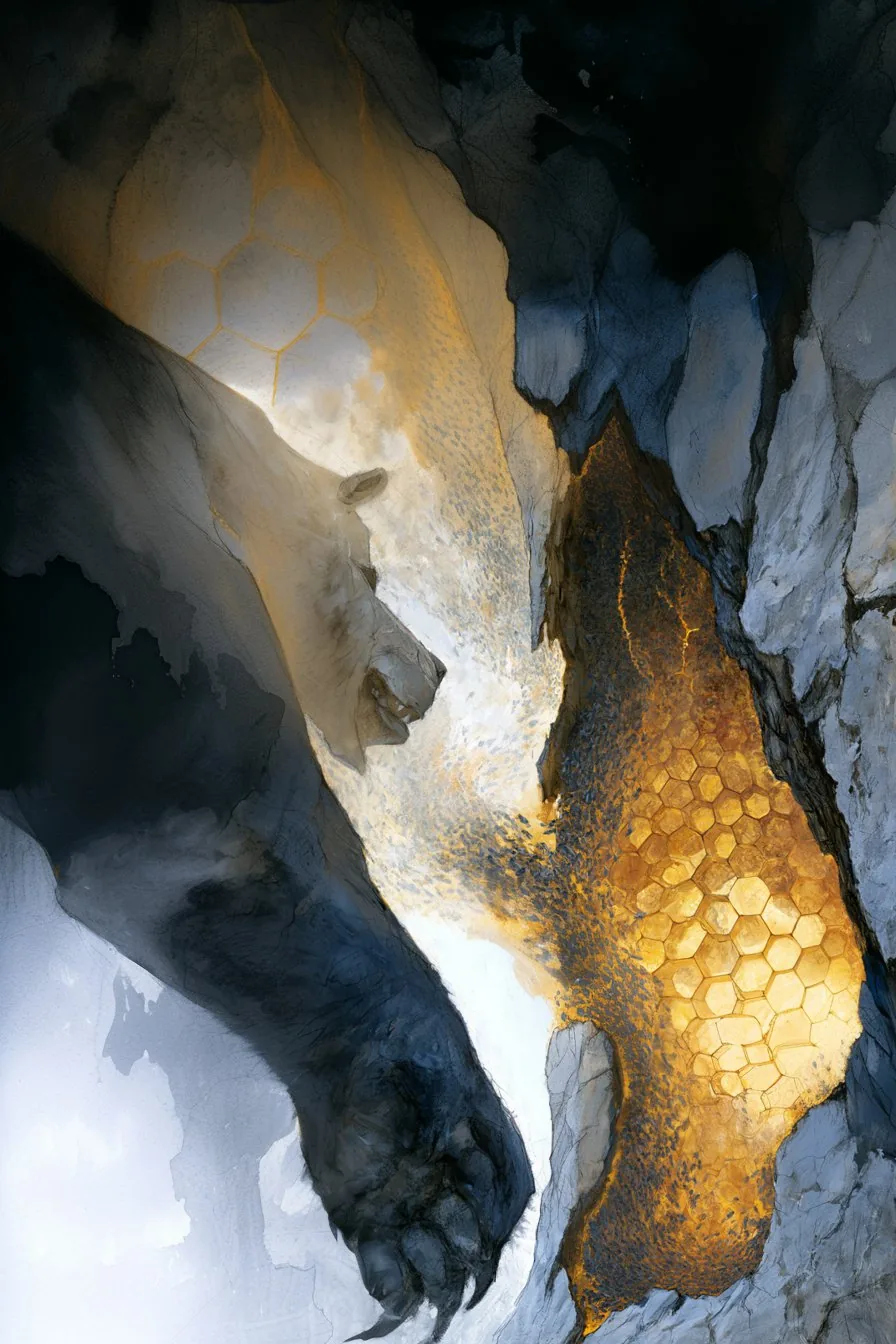
Everyone knows the honeycomb — that perfect grid of hexagons. But why hexagons? Squares tile a surface too, and so do triangles. The answer is economy: of all the shapes that can tile a flat surface with no gaps, the hexagon encloses the most space for the least wall material. Bees store the most honey using the least wax — instinctively choosing the most efficient geometry that exists.

This was suspected since the ancient Greek mathematician Pappus (~300 CE) and finally proven as the Honeycomb Conjecture by Thomas Hales in 1999. The 120° angles where three walls meet are also the equilibrium angles of soap films — bees solve an optimisation problem that took mathematics 1,700 years to confirm.

triangleP = 4.56squareP = 4.00hexagonP = 3.72(winner)circleP = 3.54(doesn’t tile)
Four shapes, same enclosed area. The hexagon's perimeter is within 5% of the circle's theoretical minimum — but unlike the circle, it tiles.

In the words of Torah

The bee knows what mathematicians needed 1,700 years to prove. King Shlomo said: "Go to the ant — consider her ways and be wise."27 The same applies to the bee. It uses the least wax for the most storage, instinctively choosing the one geometry that optimises both — with no education, no calculation, no trial-and-error. Torah calls this kind of embedded know-how chokhmah, wisdom: intelligence that was placed into the creature from the start, not learned along the way.28 What the bee produces is, fittingly, the Song of Songs' image for Torah itself — 'honey and milk under the tongue.'29
Cactus — Thriving Through Contraction

Cactus Ribs

The geometry

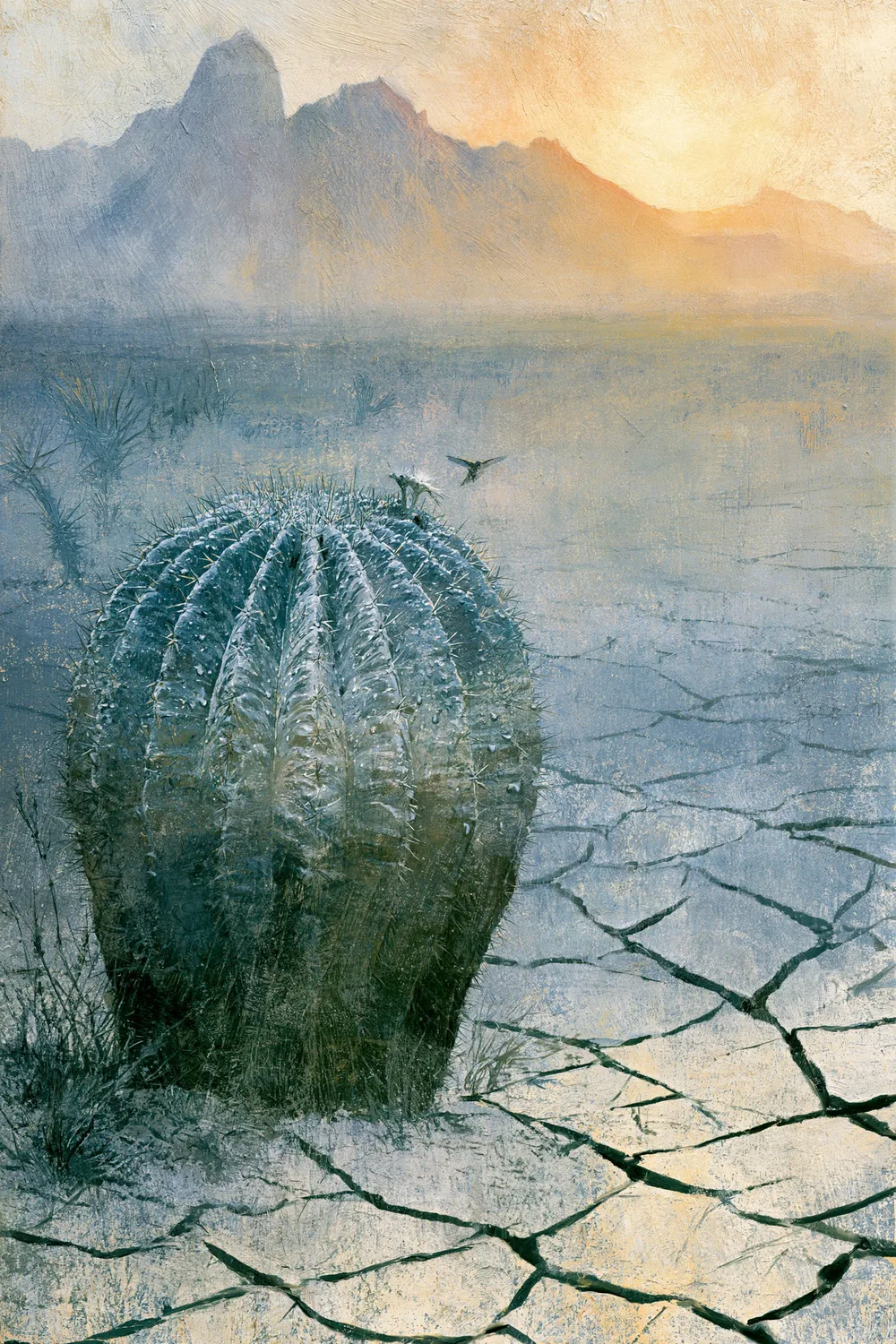
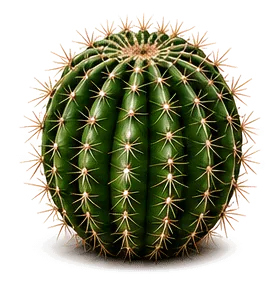
Those deep grooves running down a barrel cactus aren't just decoration — they're folds, like an accordion. After a rainstorm, the cactus swells with stored water and the folds open; in drought, it shrinks and the folds tighten. The same surface that expands to hold water contracts to conserve it. One shape, two opposite jobs.

The ribs are accordion geometry — a structure that changes volume without tearing. The areoles (spine clusters) follow phyllotactic spiral rules, and the ribs are offset so that no rib casts a continuous shadow on its neighbour, so every column gets sunlight across the full day.

In the words of Torah

Contraction that enables life. The Torah was given not in a palace but in a desert30 — the emptiest, most contracted place. The Talmud compares Torah to water: just as water flows from high ground to low ground, wisdom takes root in the humble, the reduced, the stripped-down.25 The cactus embodies this. It thrives precisely because it contracts — folding its surface, conserving every drop. Less becomes more. The Kabbalists call this principle tzimtzum — divine contraction making room for created life.31 The geometry of doing more with less is also a spiritual geometry.
Beeswarm — The Sphere of Mutual Warmth

Beeswarm Cluster

The geometry

If you've ever seen a swarm of bees hanging from a tree branch, you noticed they form a ball — not a line, not a flat sheet, a ball. There's a reason: a sphere is the shape that loses the least heat. And inside, the bees don't stay put — they rotate slowly from the warm centre to the cold outer shell and back, so no single bee freezes at the edge.

The sphere has the smallest surface-area-to-volume ratio of any solid — minimising heat loss. Internal rotation follows a convection-like pattern: bees cycle from the cold shell to the warm core, distributing the burden of exposure.

In the words of Torah

No bee stays at the cold edge permanently — they rotate inward and outward so the burden is shared. The Midrash compares Israel to a bundle of reeds: each one alone is fragile, together they are unbreakable.32 The Talmud states it as law: "All of Israel are guarantors for one another."33 The beeswarm is what mutual responsibility looks like as geometry — a sphere because a sphere conserves the most heat, and a rotation because no member of the community should bear the hardship alone.
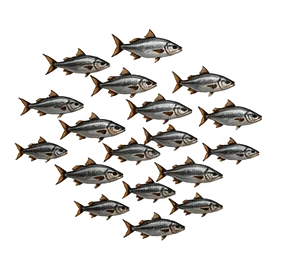
Fish Schooling — Moving as One

Fish Schooling

drag ↓ Wake Riding

The geometry

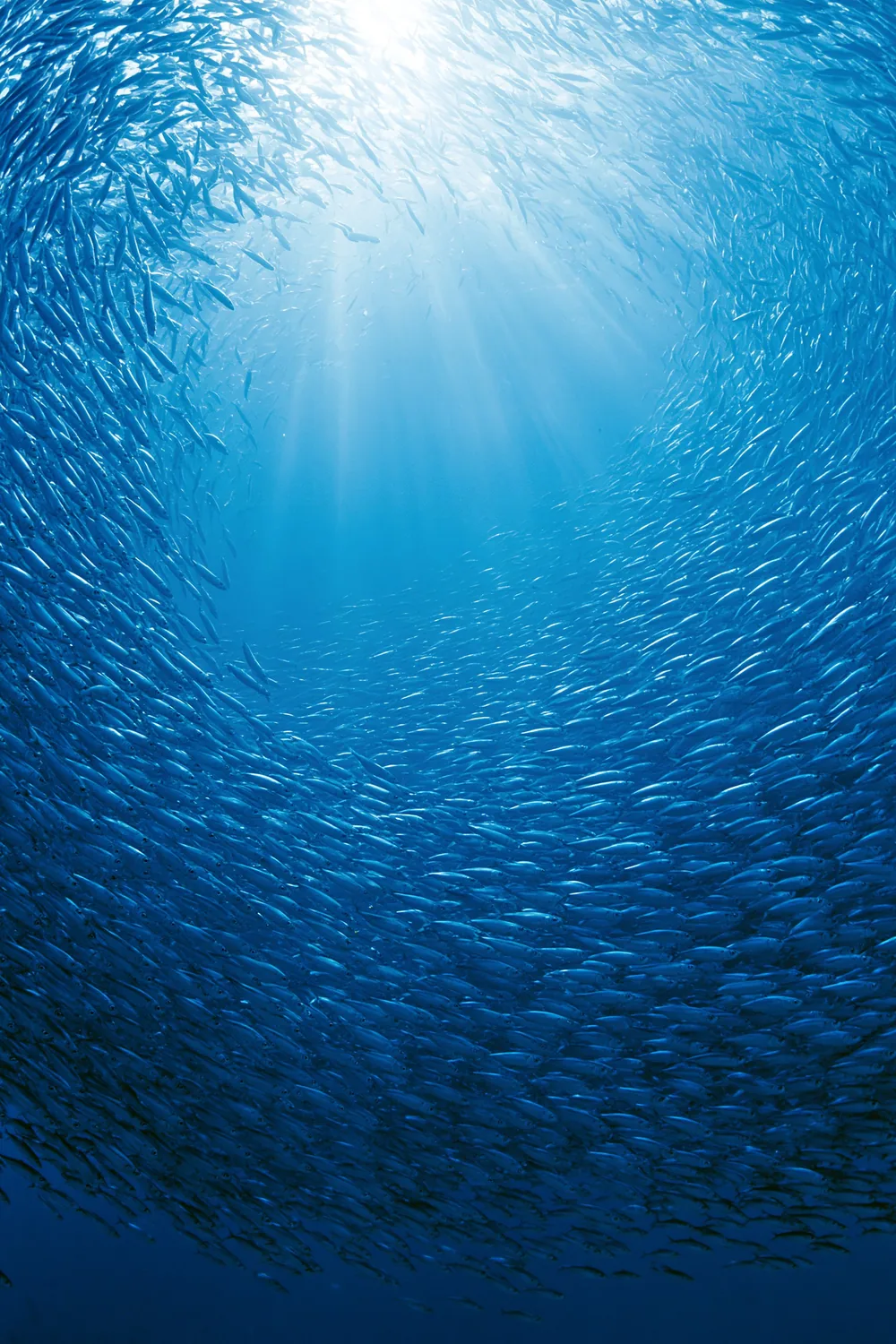
Watch a school of fish change direction and it looks like a single organism — thousands of individuals turning in unison, as though they rehearsed it. They didn't. Each fish follows three simple rules: stay close, stay aligned, and don't collide. From those three rules, the entire shimmering, coordinated display emerges.

The school forms a crystalline lattice in motion, each fish maintaining roughly one body-length of spacing. The lattice reduces drag significantly — each fish swims in the wake-vortices of those ahead — and creates the confusion effect, preventing predators from locking onto a single target.

In the words of Torah

At Sinai, all Israel encamped 'like one person with one heart' — a singular verb for a plural nation, because each individual arrived at the same acceptance.55 Like the organs of a single body: the hand differs from the foot, each serves its own function, yet the heart — the innermost force — unifies them all. On the surface it looks like division; in truth it is the deepest unity. The fish school moves this way. No leader gives orders. Each fish follows the same local rules, and the whole school turns as one.
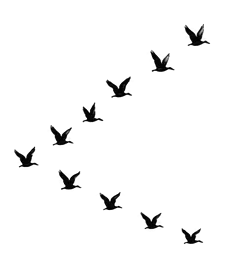
Bird Flight (V) — Shared Leadership

Bird Flight (V)

~14% Energy Saved in Formation

The geometry

Every autumn you look up and see geese flying in a V. It's such a familiar sight you might not stop to wonder: why a V? Why not a line or a cluster? The answer: each bird flies in the updraft created by the wingtip of the bird ahead. The V is the exact angle that captures the most lift. And the lead bird — which gets no help — rotates back when it tires.

Vortex aerodynamics: each bird's wingtip generates a rotating air vortex. The bird behind and to the side flies in the rising edge of that vortex. The V-angle (typically 24°–30°) is the cone of optimal lift transfer. Studies on pelicans and geese show energy savings of 10–14% for trailing birds — enough to extend range significantly over long migrations.

In the words of Torah

David divided the sons of Aharon into twenty-four mishmarot — priestly watches — each family serving the Temple in rotation.58 The holiest office was never permanent — the one who served this week stepped back, and another took his place. Sacred duty is designed to be shared. The V-formation works the same way. The lead bird breaks the headwind for the entire flock, bears the greatest resistance, then drops back when spent and another moves forward. No single creature was made to carry the burden alone. The rotation is not a flaw in the design — it is the design.
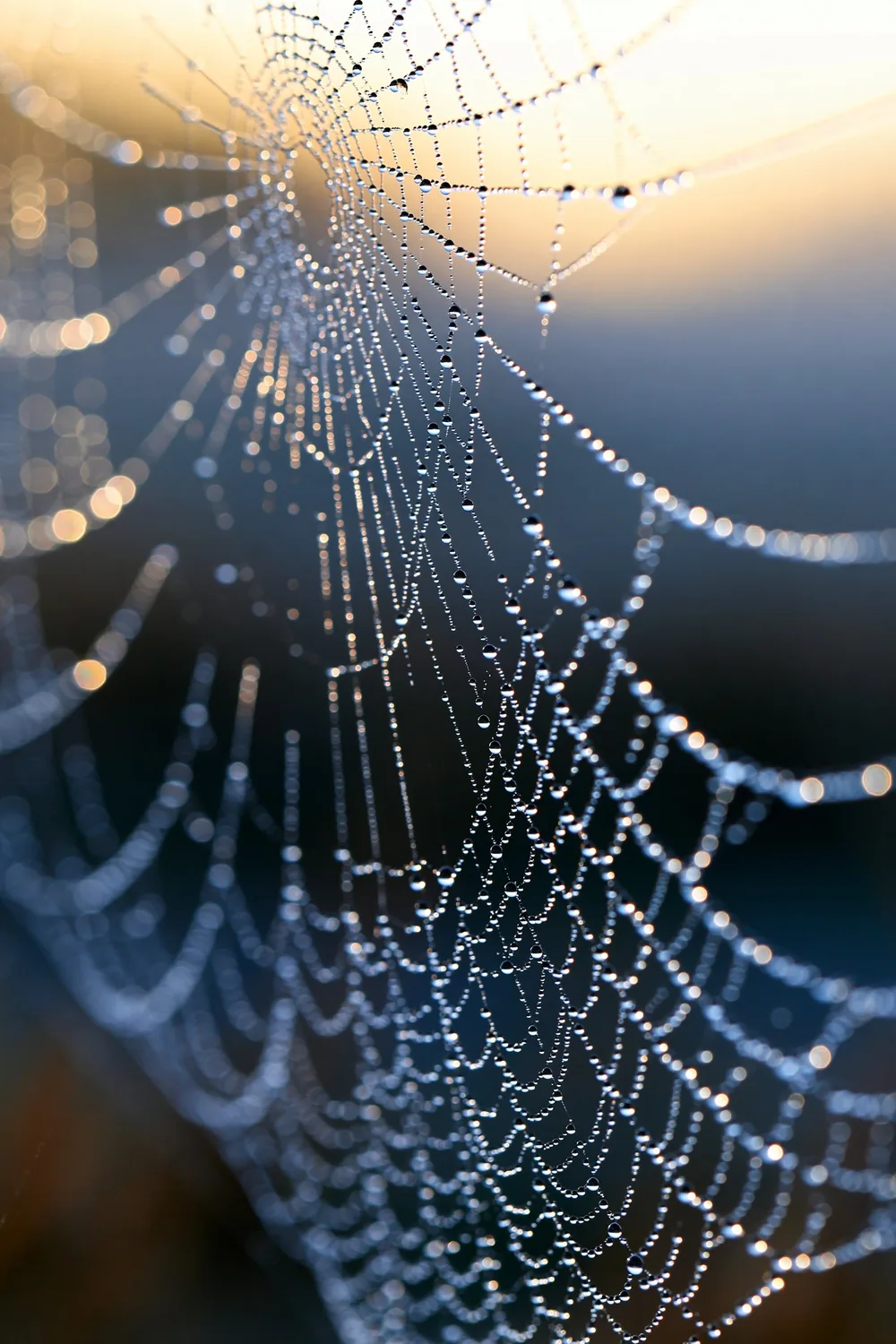
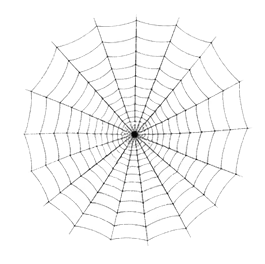
Spider Web — Two Geometries, One Trap

Spider Web

2 Kinds of Silk

The geometry

Walk through a garden at dawn and you'll see a spider web beaded with dew — those concentric rings crossed by straight spokes, strung between branches like a tiny trampoline. It looks delicate, but try pushing one strand — the whole web flexes and holds. That's because there are actually two different kinds of silk at work, doing two different jobs.

The orb-weaver lays radial tension lines first (structural silk, non-sticky), then builds the capture spiral (sticky silk, evenly spaced — an Archimedean spiral) working outward from the centre. Tension distributes across all spokes — a struggling insect breaks only the local capture line, never the structural web. Two types of silk, two geometries, working together as a single integrated trap.

In the words of Torah

The first act after the light was made was distinction — vayavdel, Hashem separated the light from the darkness.59 The kohen's mandate is the same: to distinguish between the holy and the profane, between the impure and the pure.60 Not because these are obvious opposites — precisely because they can look alike. The spider's two silks teach this. Radials and spirals appear nearly identical, yet one is structural and the other is a trap. The web works only because the spider knows which thread to walk on and which to leave alone. Havdalah is the first wisdom.
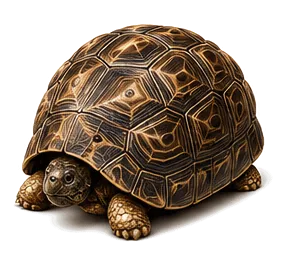
Tortoise Shell — Armour That Grows

Tortoise Shell

38 Plates, One Pattern

The geometry

Turn a tortoise over (gently) and you'll see a mosaic — interlocking plates, each one with growth rings like a tiny tree stump. The pattern is remarkably consistent: the same number of plates, in the same arrangement, in every individual of the species. And as the tortoise grows, the mosaic doesn't crack or peel — it grows with the animal, each plate expanding ring by ring.

A tessellation of polygonal scutes — typically 38: 5 vertebral down the spine, 4 pairs costal on the sides, 11 pairs marginal around the rim, plus the nuchal plate at the neck. Annual growth rings are added to each scute, allowing the rigid structure to expand without losing integrity.

In the words of Torah

The tortoise doesn't put on armour; the armour is part of its body. It grows with the animal, expanding ring by ring without ever cracking. R' Bachya calls this kind of built-in provision the principle of bitachon — trust — woven into the fabric of creation itself.1 The tortoise doesn't need to acquire protection; it was born with it. The geometry of the shell — rigid enough to defend, flexible enough to grow — is what trust looks like when it's engineered into a living thing.
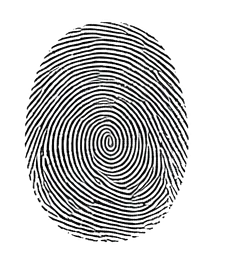
Fingerprint — For My Sake the World Was Created

Human Fingerprint

110 BN Humans, No Repeat

The geometry

Press your thumb on a window and you leave behind a pattern of tiny ridges — loops, whorls, or arches. You've used this pattern to unlock your phone. Police have used it to solve crimes for over a century. And in all that time, among all the billions of prints ever recorded, no two have ever matched. The same three basic shapes, in every human hand — but the specific arrangement is yours alone.

Three topological patterns: loops (60–65% of people), whorls (30–35%), and arches (5%). Formed in utero between weeks 13–19 by mechanical stress on the developing skin. The ridges flow like contour lines in a vector field. No identical match has ever been found among the roughly 110 billion humans who have lived.

In the words of Torah

110 billion people, and not one repeated fingerprint. The Mishnah says it directly: 'A person stamps many coins with a single seal and they are all alike. But the King of Kings stamps every person with the seal of Adam, and not one is like another.'41 The fingerprint is the most physical proof of that teaching — the same spiralling geometry in every human hand, yet unrepeatable in any two. Every person is a singular letter in the story of creation. R' Nachman of Breslov drew the practical conclusion: each person must say, "For my sake the world was created."42 The geometry says the same thing.

Every claim, sourced

Endnotes

The Torah teachings above are stated plainly, the way the book states them. Each one is answerable to a text, and the text is here.

  1. 1Chovot HaLevavot (Duties of the Heart), Shaar HaBechinah (Gate of Examination), Chapters 1–6. R' Bachya ibn Paquda, 11th century. The entire treatise is devoted to the obligation of examining the natural world as a path to knowing the Creator.
  2. 2Bereishit Rabbah 1:1. On the Torah as the architectural blueprint of all existence.
  3. 3Talmud Bavli, Shabbat 77b. R' Zeira (or R' Yehudah in the name of Rav): "Of all that the Holy One, blessed be He, created in His world, He created nothing without purpose."
  4. 4Bereishit Rabbah 10:6. On the mazal (guiding force) appointed to every blade of grass — every form in creation receiving its own individual instruction.
  5. 5Rambam, Mishneh Torah, Hilchot Yesodei HaTorah 2:2. 'When a person contemplates these matters and recognises all the creatures… and sees in them wisdom that has no measure and no end, immediately he loves, praises, and glorifies, and has a great desire to know the Great Name.'
  6. 6Pirkei Avot 5:1. 'With ten utterances the world was created. What does this teach? Could it not have been created with one utterance? Rather, to exact punishment from the wicked who destroy a world created with ten utterances, and to bestow reward upon the righteous who sustain it.'
  7. 7Tehillim 8:4–5. The Rambam (Hilchot Yesodei HaTorah 2:2) cites this psalm as the quintessential response of the person who contemplates the cosmos.
  8. 8Ramban, Commentary on Bereishit 1:1 and 2:7. On the 'hidden' forces within nature (כוחות הטבע) as ongoing expressions of the original creative speech.
  9. 9Shemot (Exodus) 25:18–20. The Keruvim facing each other with wings outstretched — bilateral symmetry as the architecture of divine encounter.
  10. 10Bava Batra 99a. When Yisrael fulfils the will of Hashem, the Keruvim face one another; when Yisrael does not, they face the walls. The Gemara reconciles Shemot 25:20 (panim el panim) with Divrei HaYamim II 3:13 (facing the Bayit).
  11. 11Shir HaShirim (Song of Songs) 2:2. The Midrash (Shir HaShirim Rabbah 2:2) applies this to Israel's beauty emerging from among the nations.
  12. 12Maharal of Prague, Tiferet Yisrael, Ch. 1 and passim. Tiferet as the harmonising principle — the beauty that arises from the integration of opposing qualities (chesed and gevurah).
  13. 13The Menorah as described in Shemot 25:31–40. Seven branches from a single shaft — radial structure reflecting divine unity expressed through multiplicity. See Ramban ad loc.
  14. 14Iyov (Job) 38:22. God challenges Iyov from the whirlwind: "Have you entered the storehouses of the snow, or have you seen the storehouses of the hail?"
  15. 15Commentary attributed to the Vilna Gaon (Gra) on Iyov 38:22. The 'storehouses' (אוצרות) contain not mere weather but treasured displays of divine wisdom reserved for appointed times.
  16. 16This principle — unity within multiplicity — is developed extensively in Maharal of Prague, Netivot Olam, Netiv HaTorah, Ch. 1, and in the Tanya, Shaar HaYichud VehaEmunah, Ch. 1.
  17. 17Iyov (Job) 12:7–8. 'But ask the beasts, and they will teach you; the birds of the sky, and they will tell you. Or speak to the earth, and it will teach you; and the fish of the sea will declare to you.'
  18. 18Perek Shirah — an ancient text (attributed variously to King David or Talmudic-era authorship) assigning a verse of praise to each element of creation, from the heavens to the sea creatures.
  19. 19Zohar, Bereishit 134b. 'R' Shimon said: Woe to the person who says the Torah merely tells stories... Every word of Torah contains supernal wisdom.' Cf. Ramban's introduction to his Torah commentary on the fractal-like nature of Torah interpretation (פרד"ס).
  20. 20Zohar, Bereishit 15a–20a, and Zohar, Beha'alotcha 152a. On the chain of emanation (השתלשלות) — divine light branching through the sefirot into increasingly differentiated forms. The fractal metaphor is apt: each level of emanation contains the pattern of the whole.
  21. 21This teaching is widely attributed to the Baal Shem Tov. See Keter Shem Tov, various editions; Tzava'at HaRivash §109–110. The idea that the whole is contained in every part is developed in Chassidic thought as a corollary of divine omnipresence.
  22. 22Bereishit (Genesis) 2:10. The Ramban (ad loc.) sees in the four rivers a model of all distribution — one source branching into channels that nourish the entire world.
  23. 23Tehillim (Psalms) 29:3–9. The 'voice of the Lord' (קול ה׳) appears seven times across these verses — in power, in majesty, breaking cedars, hewing flames of fire, shaking the wilderness — the psalm of natural revelation.
  24. 24Talmud Bavli, Shabbat 88b (also Shemot Rabbah 5:9). "Every word that went forth from the mouth of the Almighty was divided into seventy languages." Cf. Eitz Chaim, Shaar 1 (Drush Igulim V'Yosher) on the primordial light descending through vessels — a kabbalistic framework for how infinite divine energy takes branching form in creation.
  25. 25Talmud Bavli, Ta'anit 7a. 'Why are words of Torah compared to water? Just as water leaves a high place and flows to a low place, so too Torah endures only in one who is humble.'
  26. 26Pirkei Avot 4:1. Ben Zoma's definition of wisdom — extended here to teachings gleaned from every creature and natural form.
  27. 27Mishlei (Proverbs) 6:6–8. The ant as a model of industrious wisdom. The Malbim (ad loc.) extends the teaching to all creatures that display divinely implanted practical intelligence.
  28. 28Zohar, Bereishit 20a. On חכמה תתאה (chokhmah tata'ah), the 'lower wisdom' embedded in creation that mirrors the supernal wisdom (חכמה עילאה).
  29. 29Cf. Shir HaShirim 4:11; Talmud Bavli, Berachot 57a on honey as symbolic of Torah sweetness.
  30. 30Cf. Bamidbar (Numbers) 1:1 — the Torah is given in the wilderness (מדבר); Bamidbar Rabbah 1:7: "Why was the Torah given in the wilderness? To teach that one must make oneself ownerless like a wilderness."
  31. 31Tzimtzum — divine 'contraction' — is a central concept of Lurianic Kabbalah. See Eitz Chaim, Heichal 1, Drush Igulim V'Yosher. Applied here metaphorically to the cactus's strategy of contraction enabling life in barren conditions.
  32. 32Midrash Tanchuma, Nitzavim 1. The parable of the bundle of reeds — individually breakable, collectively unbreakable — applied to the unity of Israel.
  33. 33Talmud Bavli, Shevuot 39a. 'כל ישראל ערבים זה בזה' — All of Israel are guarantors (responsible) for one another.
  34. 34Bereishit 48:16. Yaakov's blessing over Ephraim and Menasheh: "May they multiply like fish (וידגו לרוב) in the midst of the earth."
  35. 35Talmud Bavli, Berachot 20a (and cf. Berachot 55b). Fish are covered by water and thus hidden from the evil eye — a metaphor for divine protection over those who dwell in humility.
  36. 36Cf. Sifrei, Devarim §346; Talmud Bavli, Ta'anit 11a. When the community stands united, divine protection is absolute. See also Zohar, Vayikra 14b.
  37. 37Yeshayahu (Isaiah) 40:31. The eagle as the symbol of spiritual renewal and divine sustenance.
  38. 38Shemot 18:13–26. Yitro's counsel to Moshe to distribute the burden of leadership — the Torah's own teaching of shared governance and delegated structure.
  39. 39Pirkei Avot 2:4. Hillel's teaching: "Do not separate yourself from the community (אל תפרוש מן הציבור)."
  40. 40R' Moshe Alshich, Commentary on Mishlei 30:28 ("The spider grasps with its hands and is in the king"s palace'). Each creature is endowed with the precise wisdom its calling requires.
  41. 41Mishnah, Sanhedrin 4:5. On the uniqueness of every human being: each life contains a world, and the King of Kings stamps every person with a singular seal — no two alike.
  42. 42Talmud Bavli, Sanhedrin 37a. On each person's obligation to feel that the world was created for their sake (בשבילי נברא העולם). Developed by R' Nachman of Breslov (Likutey Moharan I:64; cf. Likutey Halachot, Arev 3) into a teaching on each soul's unique letter in the Torah and irreplaceable mission.
  43. 43Rambam, Moreh Nevuchim (Guide for the Perplexed), Part II, Ch. 19. On the order and purposefulness observable in natural phenomena.
  44. 44Talmud Bavli, Chullin 60a and 127a. Discussions of divine wisdom manifest in the design and behaviour of creatures.
  45. 45Rambam, Moreh Nevuchim, Part III, Ch. 13. On divine wisdom (חכמה) manifest in every detail of the natural world, refuting the notion that nature operates by chance.
  46. 46Shemot 26:1–14; 36:8–19. The Mishkan's system of curtains, loops, and clasps — a web of sacred geometry. See Zohar, Terumah 159b–161b on the Mishkan as a microcosm of creation.
  47. 47Pirkei Avot 1:3. Antigonos of Socho's teaching on serving without expectation of reward — applied here to the tortoise's self-contained resilience.
  48. 48Devarim 29:28 — ha-nistarot la-Hashem Elokeinu, v'ha-niglot lanu ul'vaneinu ad olam, la'asot et kol divrei ha-Torah ha-zot. The hidden things belong to Hashem our God, and the revealed things belong to us and to our children forever, to carry out all the words of this Torah.
  49. 49Be'er Mayim Chaim on Devarim 29:28. The nitzotzot ha-kedushah (holy sparks) are hidden throughout creation, each belonging to a specific soul. Hashem directs each person's path — through what appears to be ordinary business — to the exact place where their spark awaits elevation.
  50. 50Sfas Emes, Drushim l'Chodesh Elul, on Shir HaShirim 4:12. On the nekudah pnimit — the inner point in every Jewish soul where no foreign touch rules. Gan na'ul, ma'ayan chatum. This point is always present but reveals itself only when the time is right.
  51. 51Yoma 72b on Shemot 25:11. The Aron was overlaid with gold on the inside and on the outside — mibayit u'michutz tetzapenu. Rabba derives: any talmid chacham whose inside does not match his outside (she'ein tocho k'baro) is not a talmid chacham.
  52. 52Likutei Sichot, Vol. 28, p. 47 (Naso, sicha 2). On the wagons donated to the Mishkan. The Rebbe teaches that the Mishkan was conducted generously (derech ashirus) but nothing went to waste — every detail fulfilled its purpose and reason for creation. Six wagons at a precise width and length were exactly what the load required; there was no room to add more.
  53. 53Shemot 25:40; Ibn Ezra (short commentary) ad loc., citing the Gaon. Three worlds — the great world (cosmos), the middle world (Mishkan), and the small world (man) — share eighteen structural correspondences: heavens/curtains/head, luminaries/menorah/eyes, earth/foundations/dust, angels/cherubim/thoughts, and so on. The same tavnit (pattern) at every scale.
  54. 54Kedushat Levi on Devarim 11:21, reading Yeshayahu 55:10. "Like the days of heaven upon the earth" — not longevity but relationship: just as the heavens give rain that nourishes the earth and does not return empty, so should you be, to give influence to all (l'hashpia la-kol).
  55. 55Rashi on Shemot 19:2, from the Mechilta: vayichan (singular) — k'ish echad b'lev echad, like one person with one heart. The Shem MiShmuel (Shavuot 7:25) explains: like the organs of one body, each with its own unique function, unified by the heart — the innermost force that binds them all.
  56. 56Yechezkel 47:8–9. The river flowing from the Temple enters the Dead Sea — v'nirp'u ha-mayim, and the waters are healed. Fish swarm where nothing could live. Rashi (ad loc., citing Tosefta Sukkah 3:9): the waters go out to heal the salt seas and sweeten them.
  57. 57Pirkei Avot 2:16. The Maharal (Derech Chaim ad loc.) explains: the work cannot be completed because human perfection is never static — that is how we were created. But every labour is a completion in itself, like a sower whose every seed is already whole. Unlike a house, where only the finished building counts, in sacred work every effort is the product.
  58. 581 Divrei HaYamim 24:1–5. David divided the kohanim into twenty-four mishmarot, assigned by lot — va-yachlekum b'goralot eileh im eileh, these with these — so that no single family held the holiest service permanently.
  59. 59Bereishit 1:4. Vayavdel Elokim bein ha-or uvein ha-choshech — and God separated the light from the darkness. The Zohar (1:32a) teaches that this separation was not destruction of the darkness but the establishment of proper boundaries — each given its domain.
  60. 60Vayikra 10:10. Ulehavdil bein ha-kodesh uvein ha-chol, uvein ha-tamei uvein ha-tahor. The Derech Mitzvosecha (Tzemach Tzedek, Mitzvas Milah ch. 5) explains: the essential difference between holiness and its opposite is not appearance but bitul — self-nullification. Two things can look identical and serve opposite purposes; wisdom is knowing which is which.

The terms

Glossary

Bilateral symmetry
— Mirror symmetry across a single axis. Fold the shape down its midline and the two halves match. The architecture of almost every animal body.
Bitachon
(Hebrew) — Trust, particularly in Hashem.
Chokhmah
(Hebrew) — Wisdom. In Chassidic thought, the source-level intelligence that precedes elaboration.
D₆ (dihedral group)
— The full symmetry group of a regular hexagon: six rotations and six reflections, twelve symmetries in all.
Diffusion-limited aggregation
— A growth process in which particles wander randomly and stick on contact, producing branching fractal patterns. Models lightning, river networks, and mineral dendrites.
Fibonacci sequence
— Named after Leonardo of Pisa (c. 1170–1250), known as Fibonacci. The numbers 1, 1, 2, 3, 5, 8, 13, 21, 34, 55, … in which each term is the sum of the two before. Ratios of successive terms converge to φ.
Fibonacci spiral
— A piecewise quarter-circle spiral inscribed in a tiling of Fibonacci-numbered squares; the discrete approximation of the smooth golden spiral. See logarithmic spiral.
Five-fold symmetry
— Rotational symmetry of order 5; a turn of 72° maps the shape to itself. Found in flowers, sea urchins, and starfish; rare in minerals because regular pentagons cannot tile a plane. Also called pentaradial.
Fractal
— A pattern that repeats its structure at every scale. Coined by Benoît Mandelbrot in 1975 from the Latin fractus (broken).
Fractal dimension
— A measure of how completely a fractal fills space, falling between two integer dimensions. A coastline is ~1.25; lightning ~1.7; Romanesco broccoli ~2.66; the human lung surface ~2.97.
Golden angle
— 137.5° (= 360° ÷ φ²). The angle between successive seeds in a sunflower head; produces the densest non-overlapping packing.
Golden ratio (φ)
— The irrational number (1 + √5) ⁄ 2 ≈ 1.618. Two quantities are in golden ratio when the smaller is to the larger as the larger is to the sum.
Hashem
(Hebrew) — Literally "the Name." The customary way to refer to God in Torah-observant speech.
Honeycomb Conjecture
— The proposition that a regular hexagonal grid is the most efficient way to divide a plane into equal-area cells (least perimeter per unit area). Proved by Thomas Hales in 1999.
Logarithmic spiral
— A spiral whose radius grows by a constant factor with each turn — also called the equiangular spiral because every radius cuts the curve at the same angle. The nautilus shell, galaxy arms, and storm fronts all follow this curve.
Murray's Law
— In a branching vessel, the cube of the parent's radius equals the sum of the cubes of its branches' radii. Optimises flow in vascular networks, the lungs, and river systems.
Panim el panim
(Hebrew) — "Face to face." The closeness of divine encounter, as in Devarim 5:4.
Phyllotaxis
— The arrangement of leaves, seeds, or scales around a stem. Most plants follow a Fibonacci-based pattern set by the golden angle.
Radial symmetry
— Symmetry around a central axis or point; the shape repeats under rotation. Order n means a turn of 360° ⁄ n maps the shape to itself.
Self-similarity
— The property of a shape in which any part resembles the whole. The defining feature of fractals.
Six-fold symmetry
— Rotational symmetry of order 6; a 60° turn maps the shape to itself. Native to snowflakes and hexagonal lattices.
Tensegrity
— From "tensional integrity." A structural system held in shape by a balance of compression and continuous tension. Found in cell cytoskeletons, geodesic domes, and certain architectural structures.
Tessellation
— A tiling of a flat surface with no gaps or overlaps. Among regular polygons, only triangles, squares, and hexagons tessellate.
Tiferet
(Hebrew) — Beauty, splendour. In Kabbalah, the harmonising attribute between chesed (giving) and gevurah (restraint).
Tzimtzum
(Hebrew) — Divine contraction. The kabbalistic concept that Hashem "withdrew" to make space for creation.

About this shelf

Where it sits

Codes in Nature — A Torah Companion is a book of the Moshiach & Science department by another route. The wire on that page reads this morning's findings against six passages; this reads two dozen shapes that were in the world before anybody wrote anything down, against the sources that describe them. The argument is the same one, made slowly.
The text and the artwork are from the printed edition, which is in preparation with The Tree of Life Books. A resemblance between a shape and a source is not a proof of anything, and none of the readings here are offered as though it were.